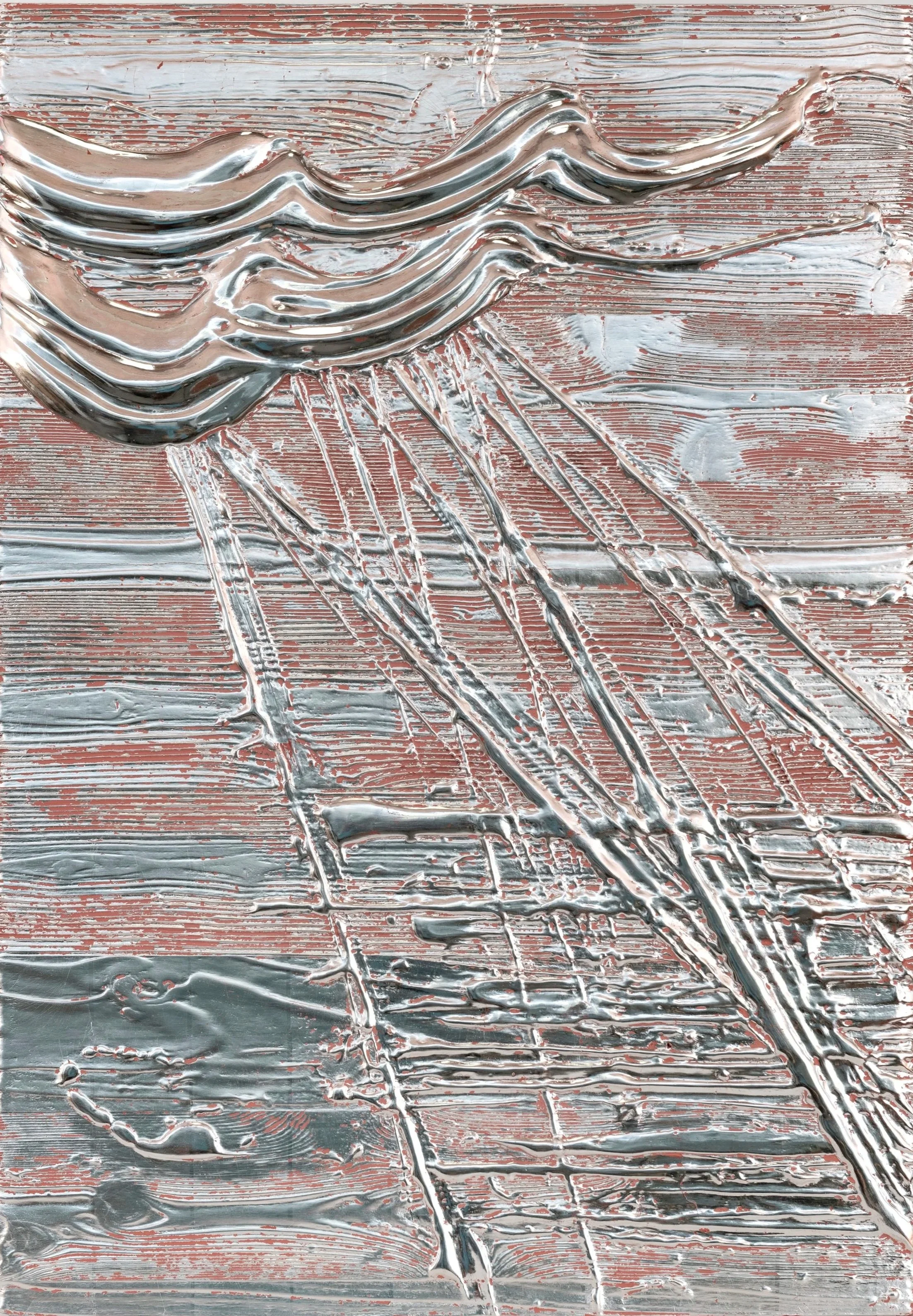
Nancy Lorenz is a New York-based artist who makes objects of incandescent beauty. Her practice deconstructs modernist methods and transforms traditional materials.
Palladium Cloud with Iron, 2024, palladium leaf, iron fillings, jute, and pigment on wood panel, 20 x 15 in.Lacca povera: an 18th-century Italian decorative practice in which modest materials were transformed to evoke the richness of Asian lacquer. Artisans in Venice and across northern Italy assembled printed images—engravings and woodcuts—onto furniture surfaces, sealing them beneath layers of varnish to create a luminous form of embellishment. What emerged was not simply imitation, but a hybrid form where value was produced through process rather than material cost.
Nancy Lorenz extends this logic into the present, often working with humble supports such as cardboard that retain their material presence even as they are built up through layers of resin, metallic leaf, and pigment. Like lacca povera, her work is constructed through accretion: surfaces are not painted so much as assembled, their depth the result of physical layering rather than illusionistic space. The “poor” substrate is not hidden, it is activated, serving as the ground from which a complex, luminous surface emerges.
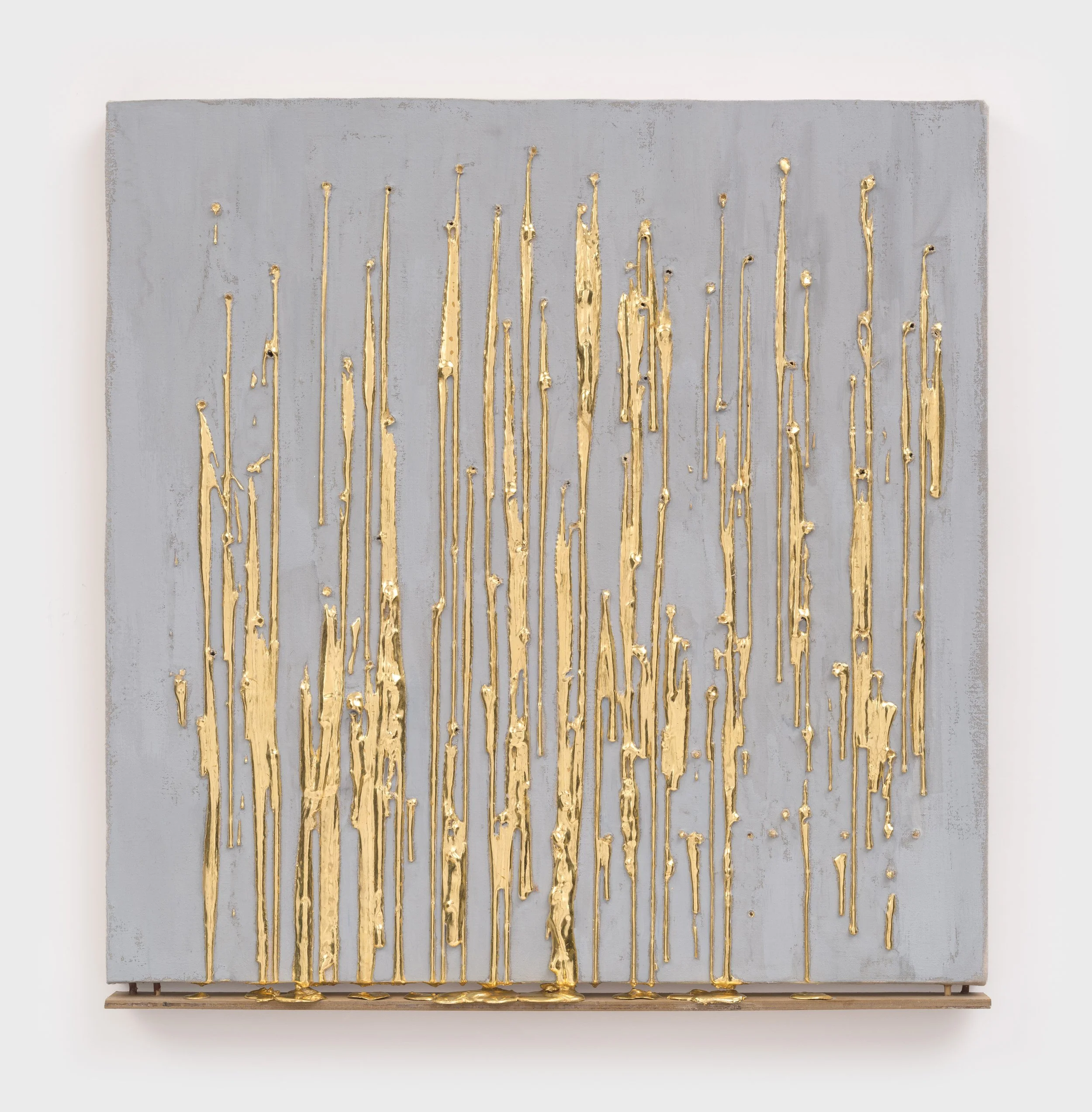
Rain, 2025, gold leaf, mother of pearl inlay, on wood panel, 24.5 x 18.5 in.In eighteenth-century Italy, so-called lacca povera transformed modest materials into luxury goods. Two centuries later, the artists of Arte Povera would similarly turn to humble substances, but toward markedly different ends. Rather than aspiring to the look of refinement, they foregrounded the raw, contingent qualities of their materials—earth, fabric, metal—rejecting illusion in favor of presence. If lacca povera elevated the ordinary through surface, Arte Povera stripped away surface to confront the conditions of making and meaning more directly.
Lorenz’s work moves between these poles. Her compositions often begin with unassuming supports—cardboard or wood panels—yet accumulate pours of resin and layers of leaf that evoke both fragility and splendor. Like lacca povera, her surfaces are constructed through acts of cutting, layering, and sealing; like Arte Povera, they retain a sensitivity to the material’s origin and contingency, the tension between the precious and the provisional.
Palladium Iron, 2024, palladium leaf, iron, on wood panel, 24 x 18 in.Recent Work
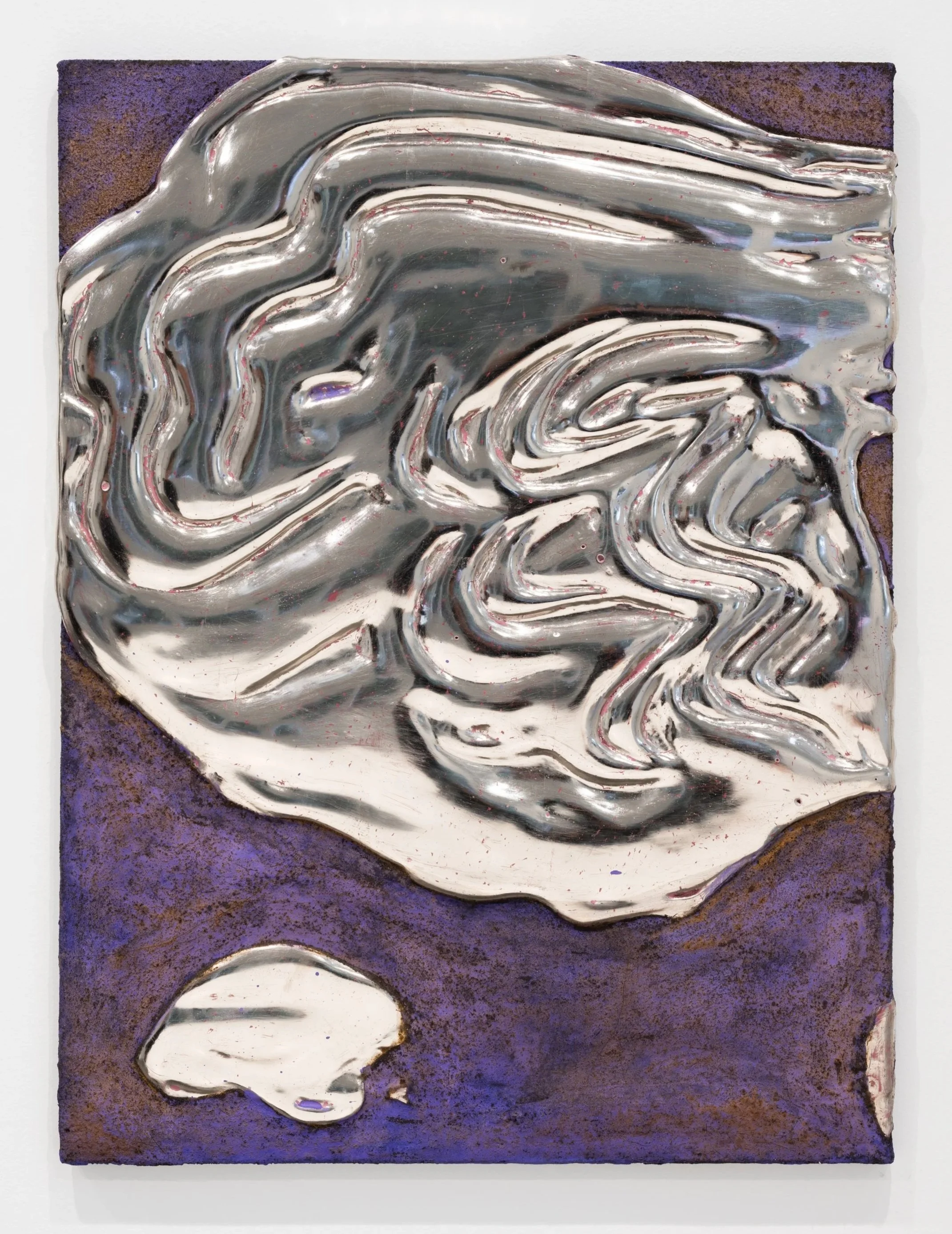
Palladium Cloud with Iron, 2024
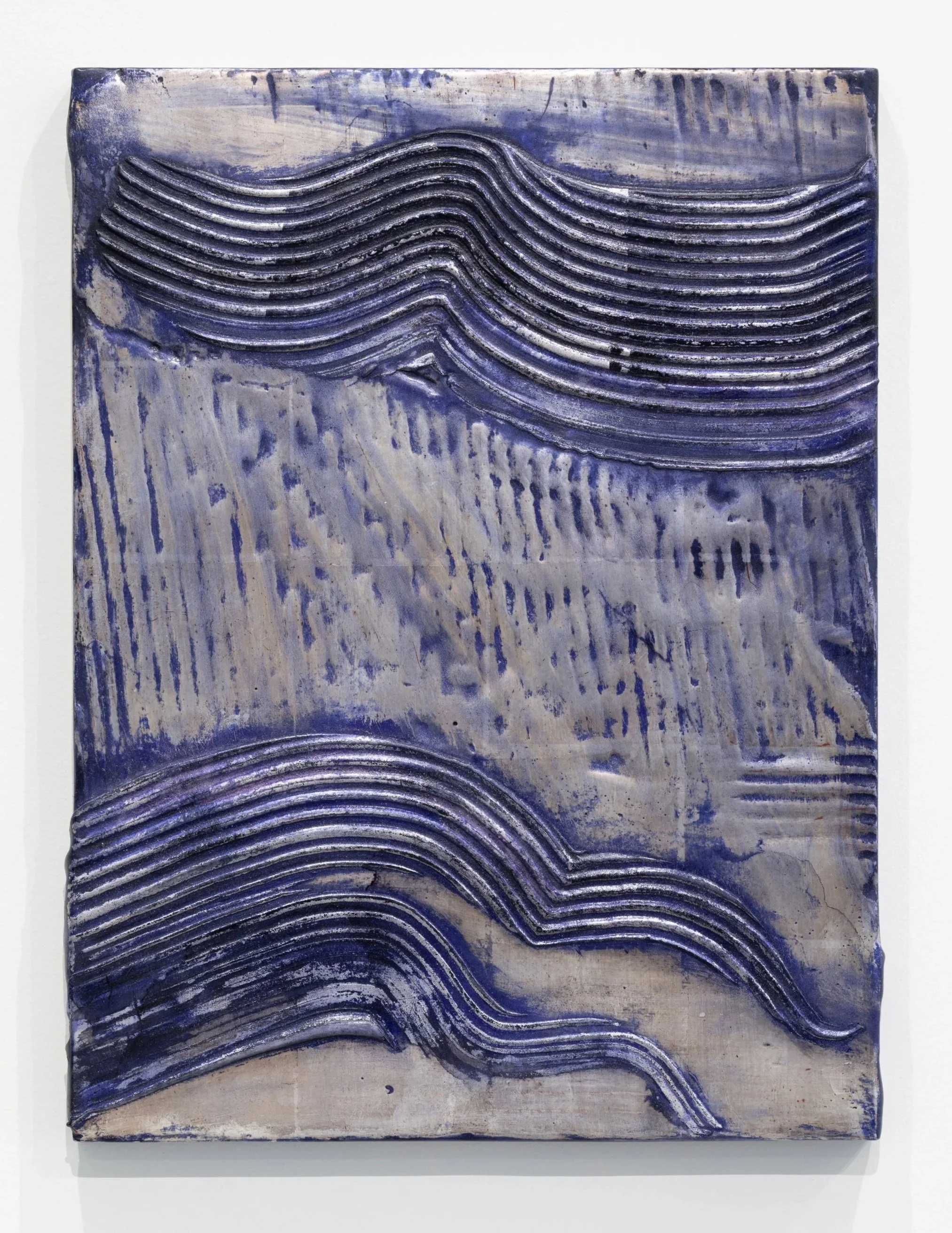
Silver Light, 2024
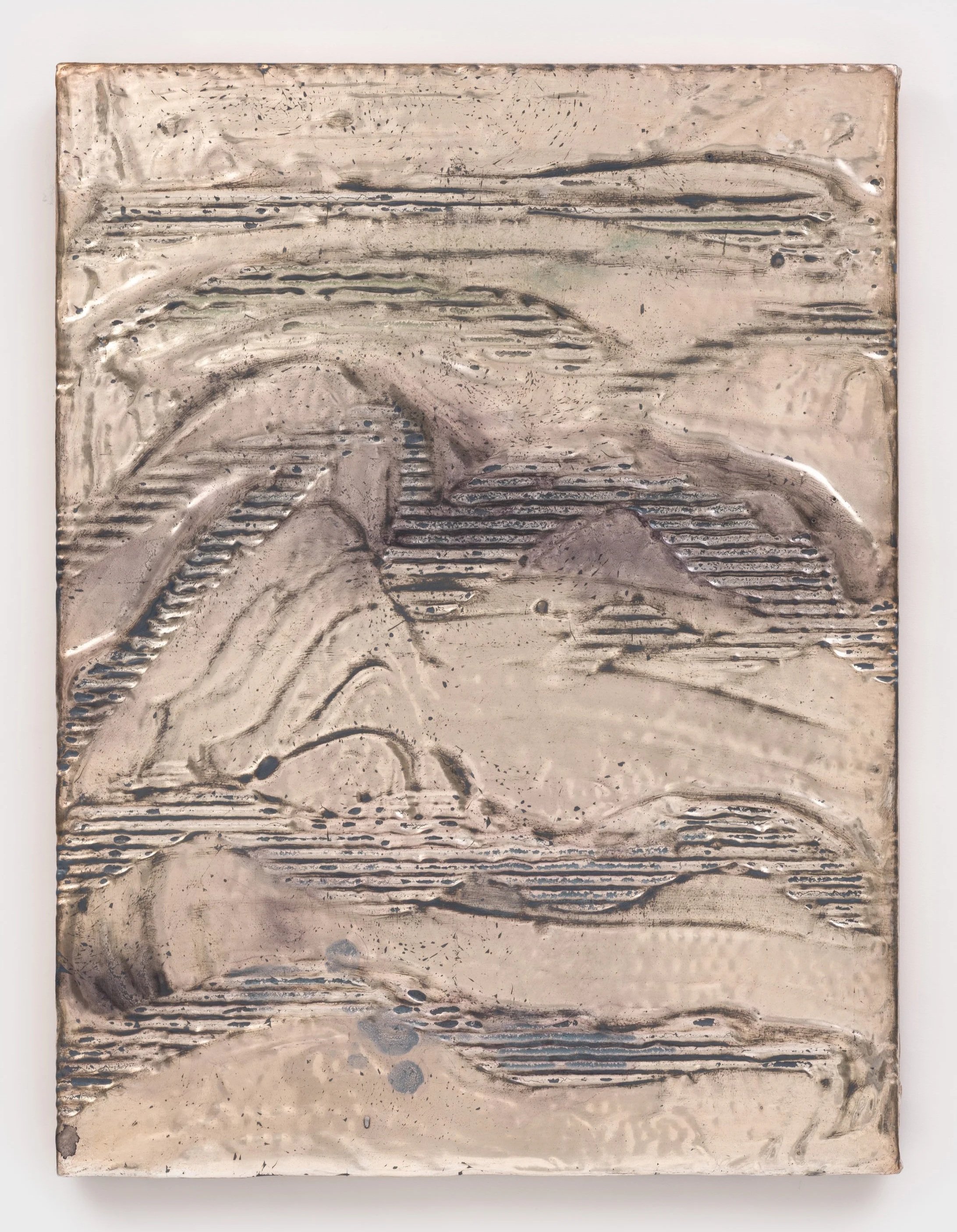
Silver Mountains, 2024
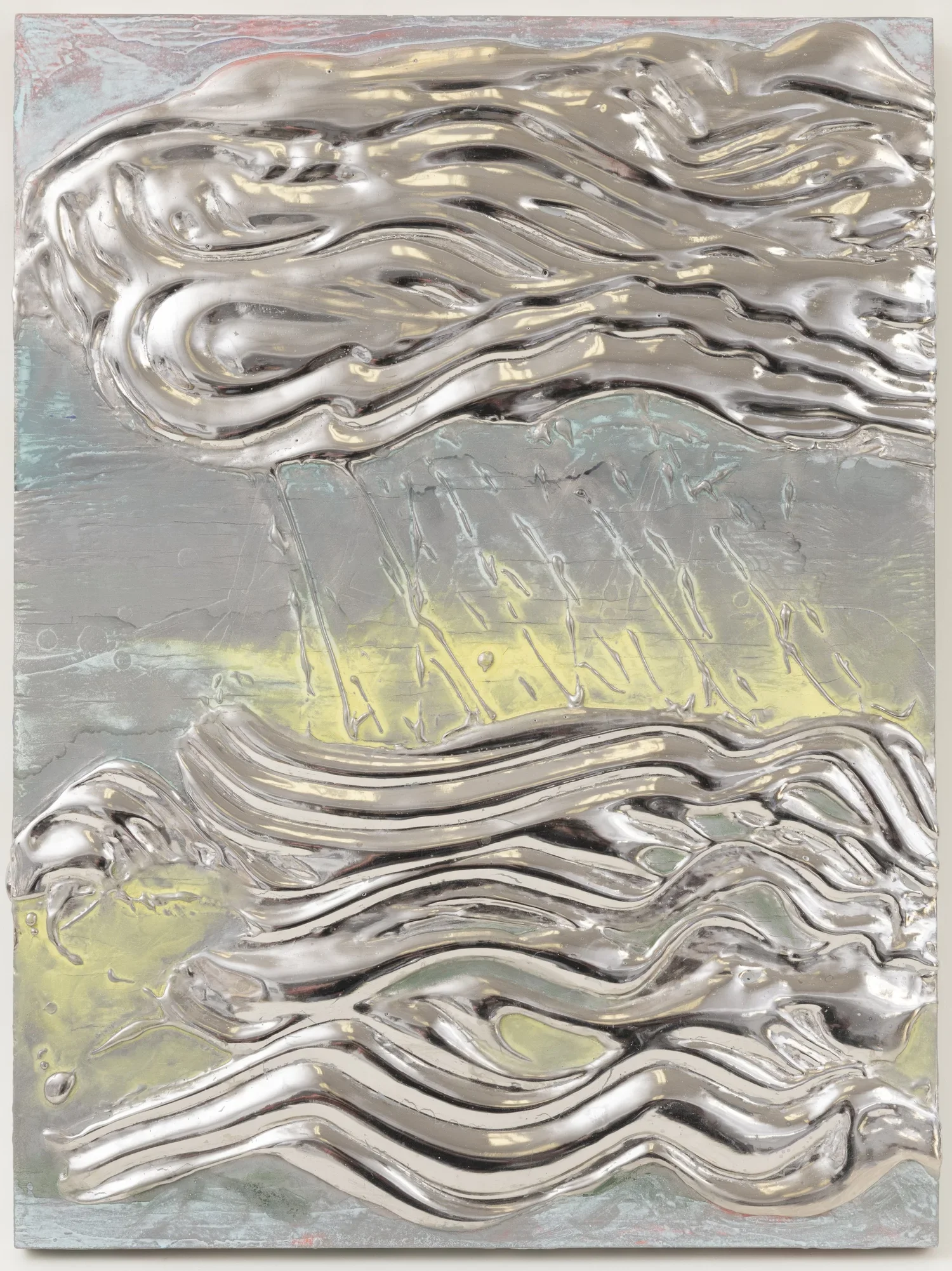
Palladium Cloud, 2023
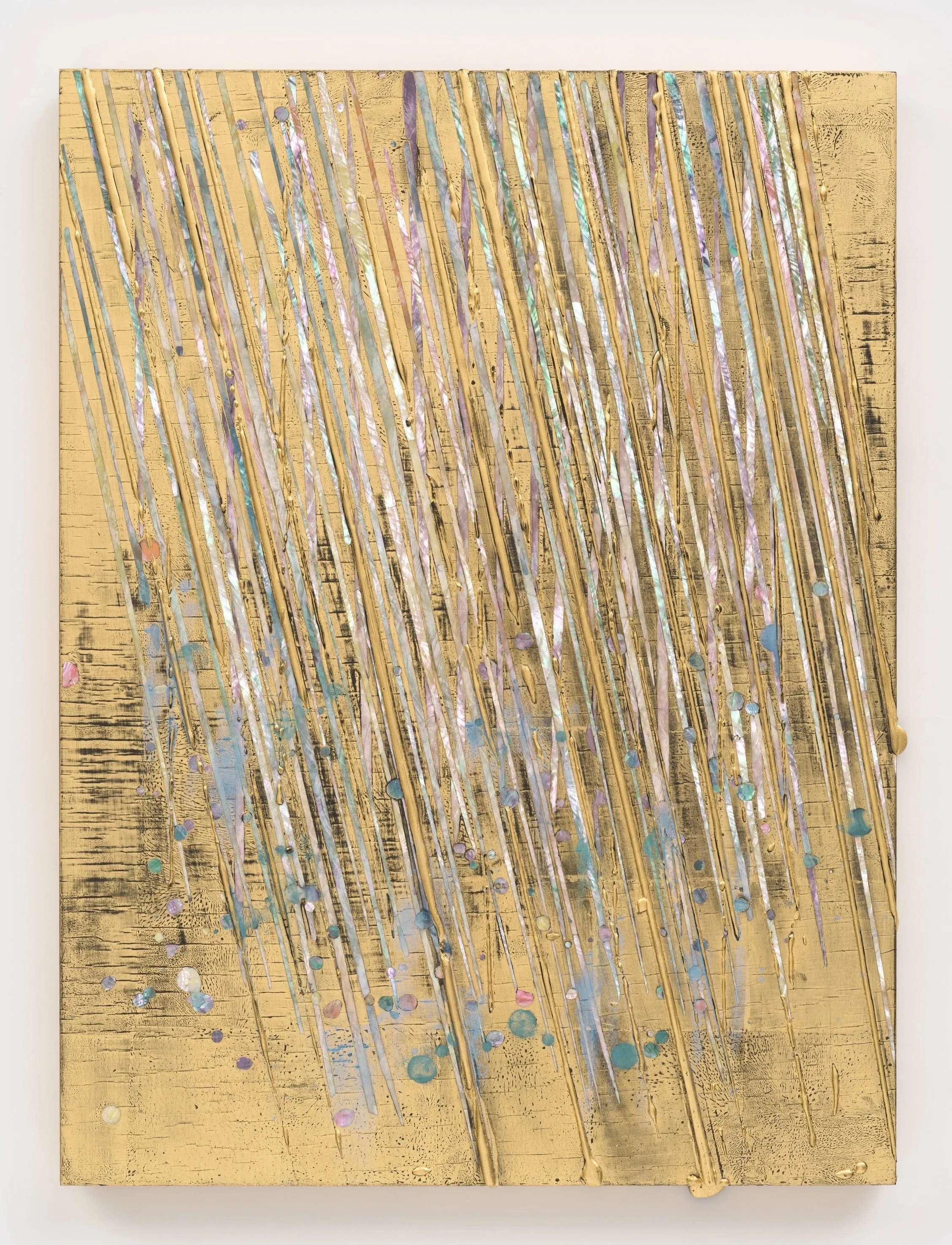
Rain, 2025
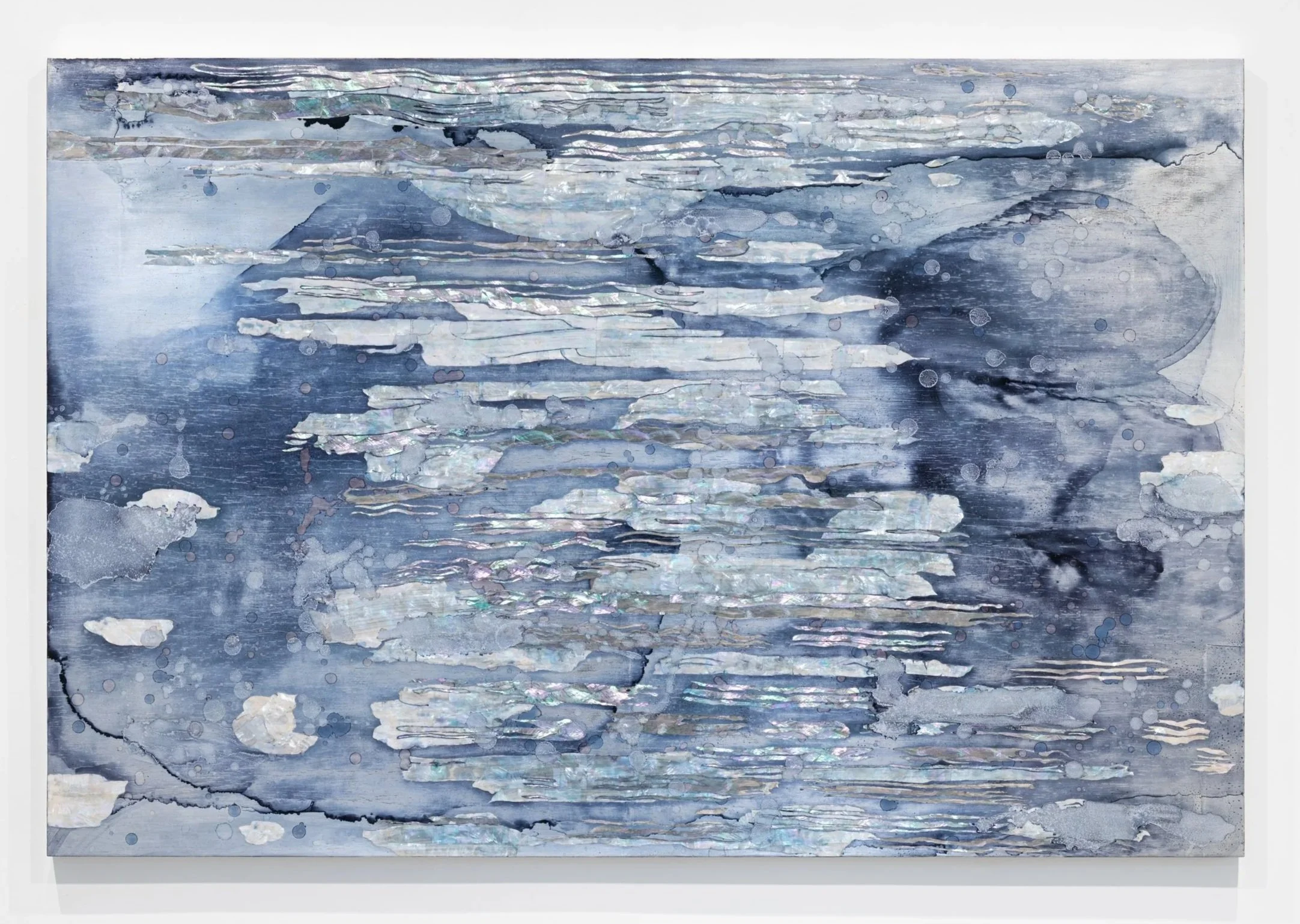
Moonlight, 2023
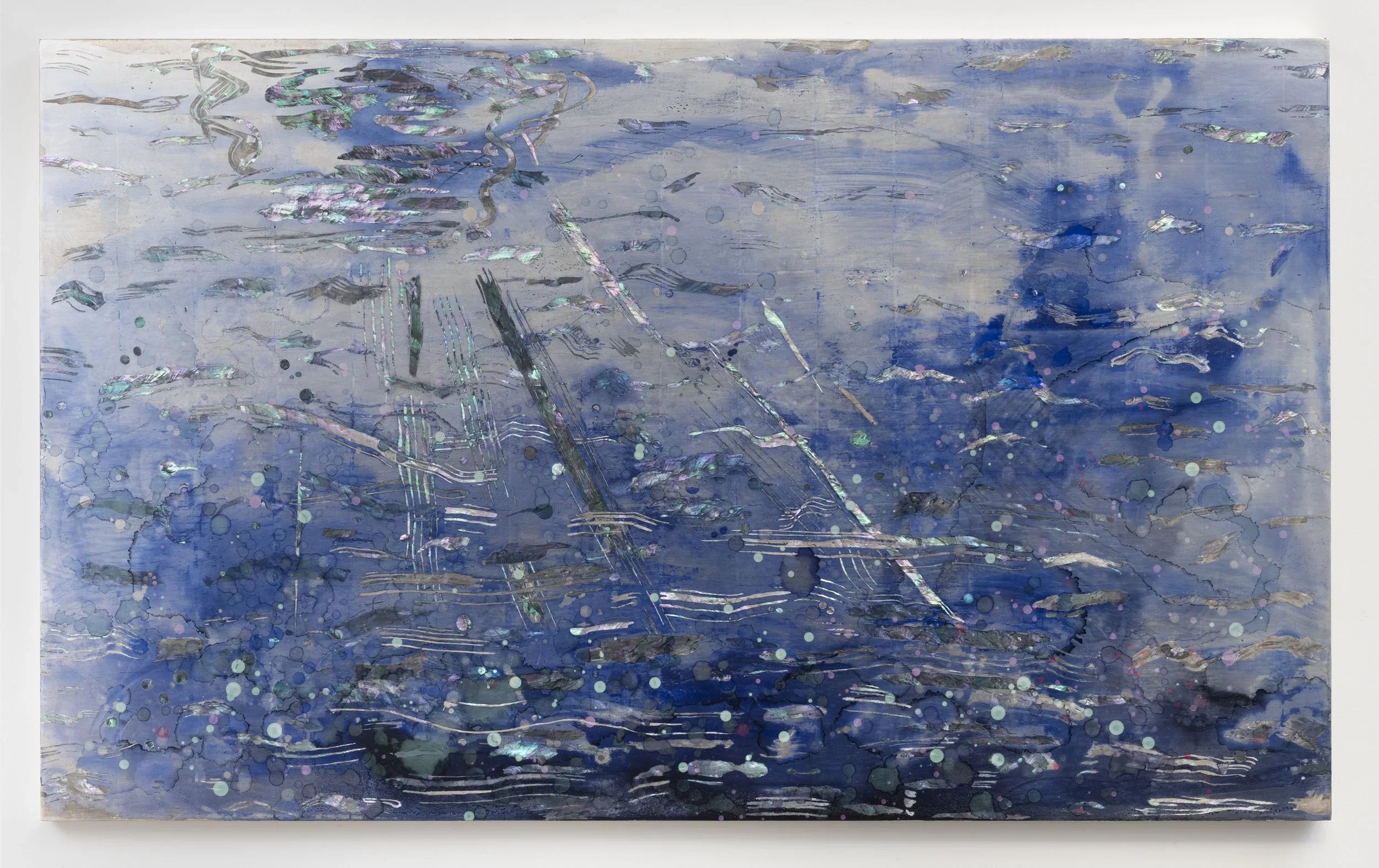
Lines of Light, 2024
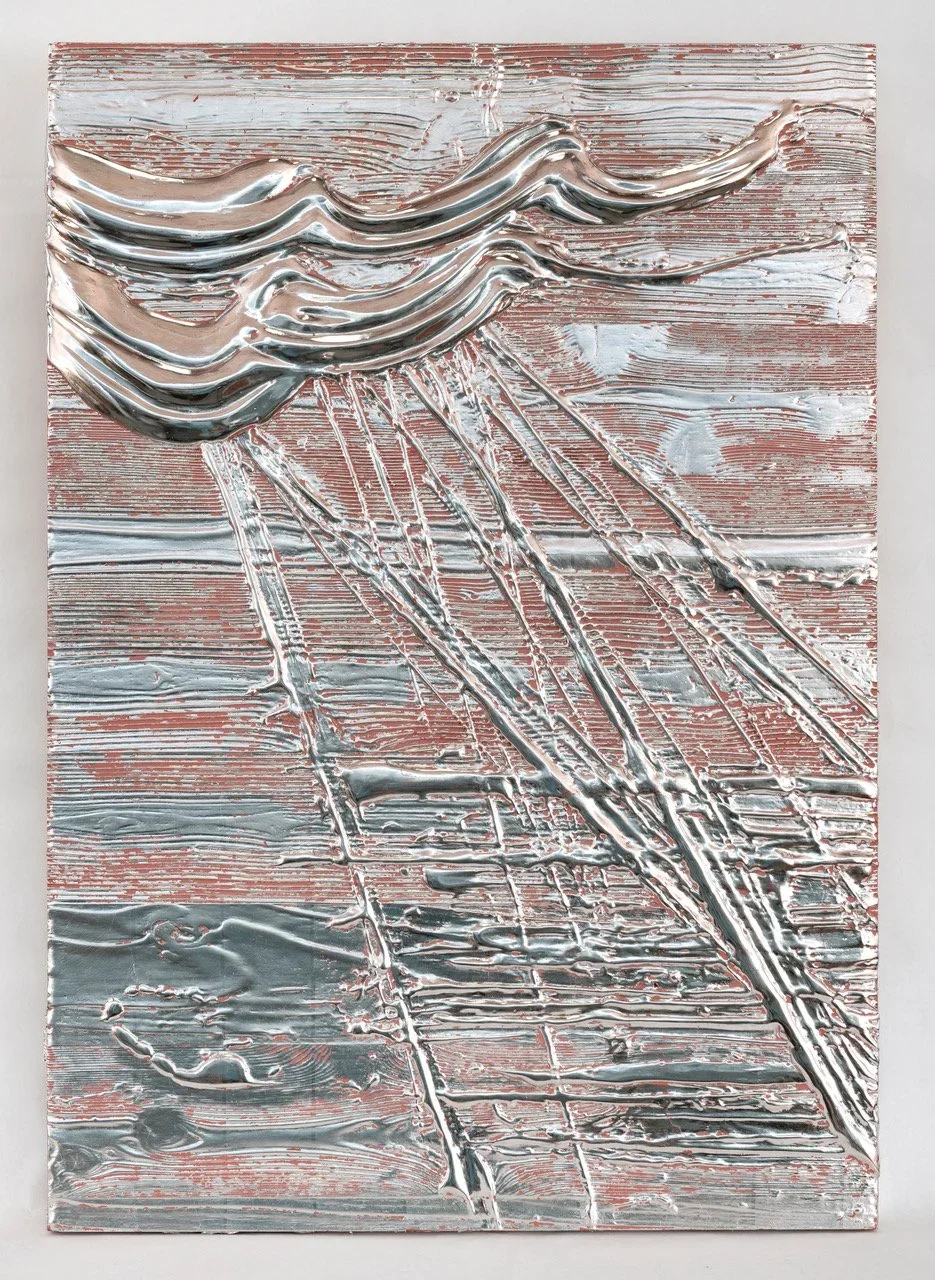
Palladium Light and Clouds, 2021
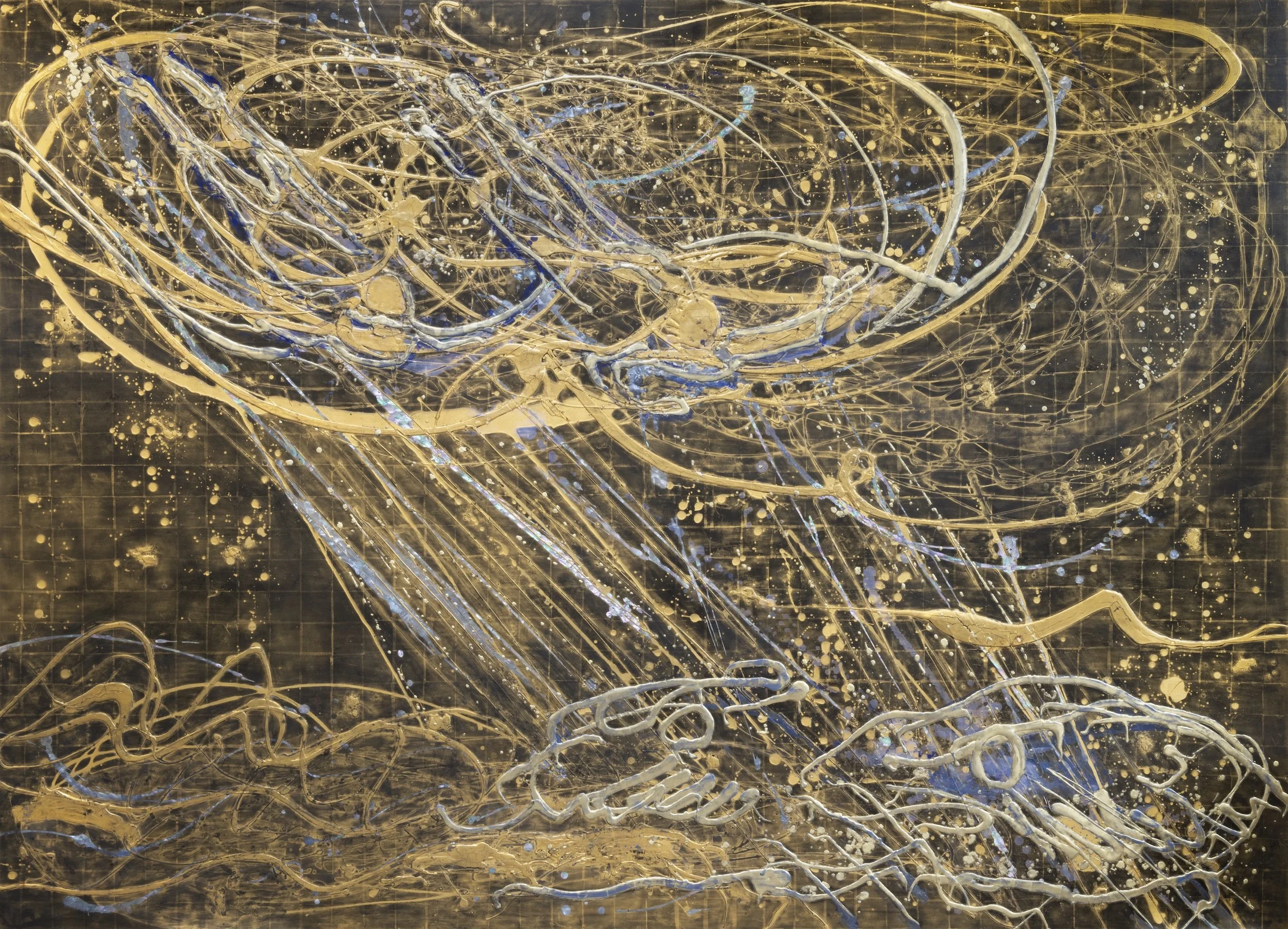
Flight, 2021
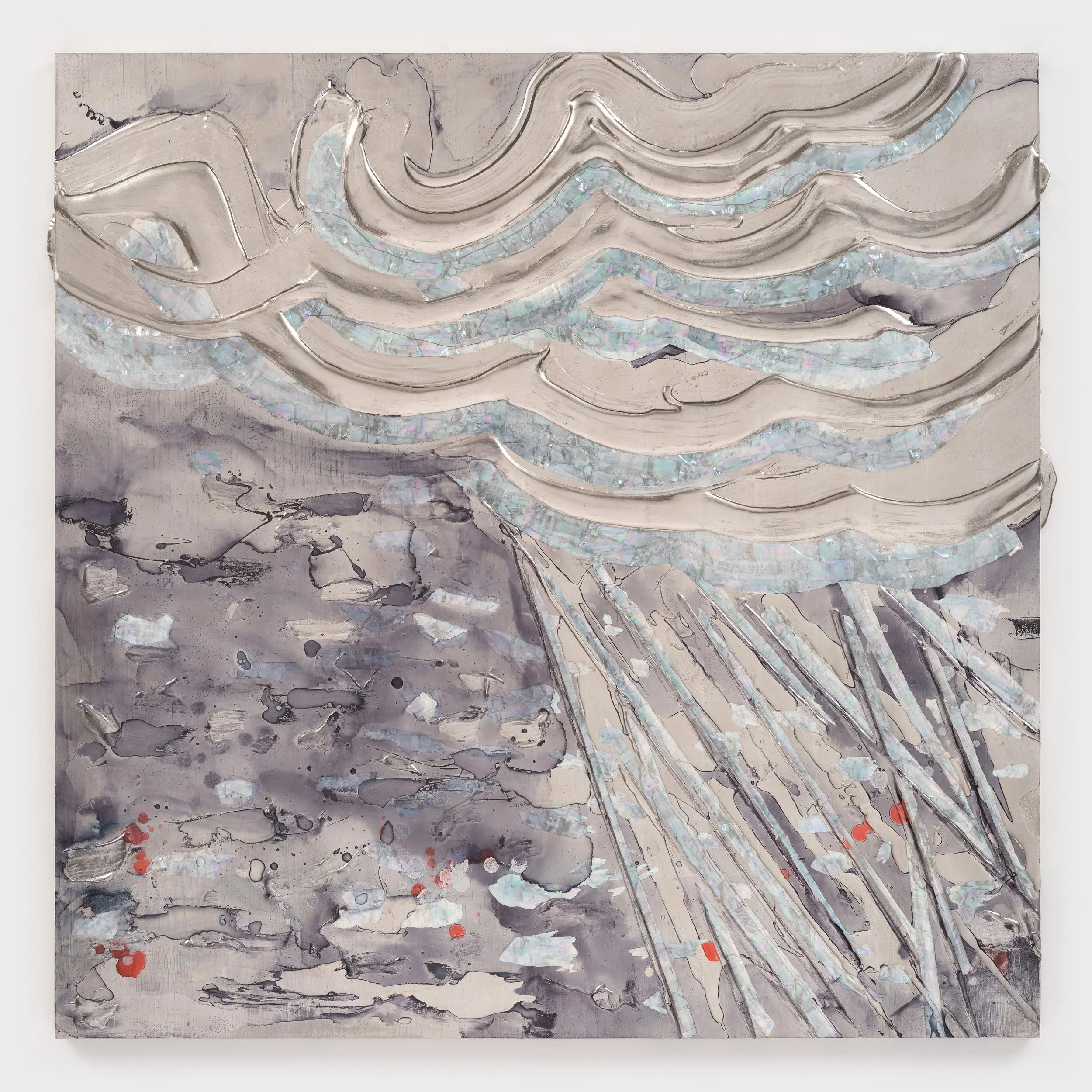
Sea and Sky, 2025
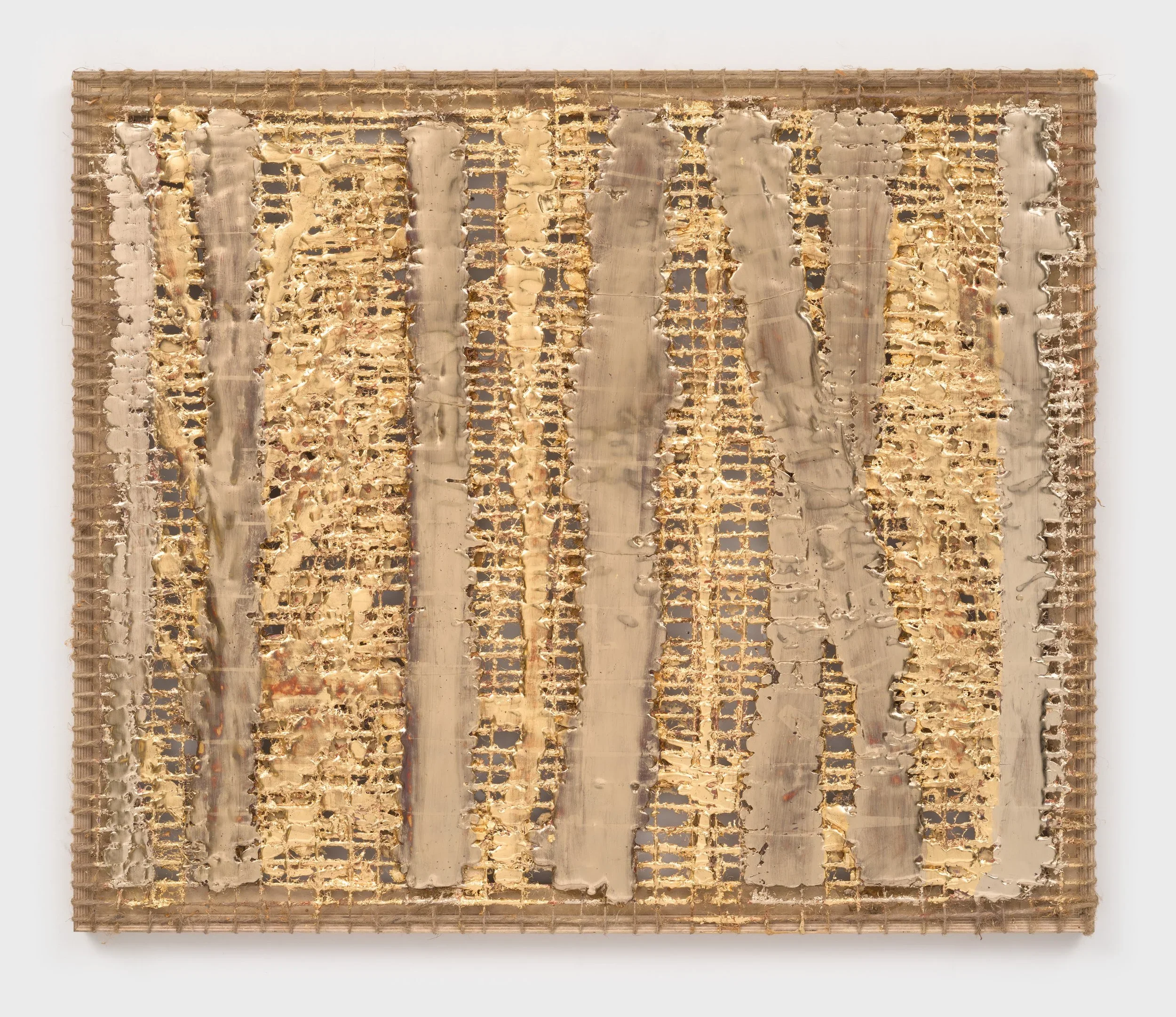
Wood Interior, 2025
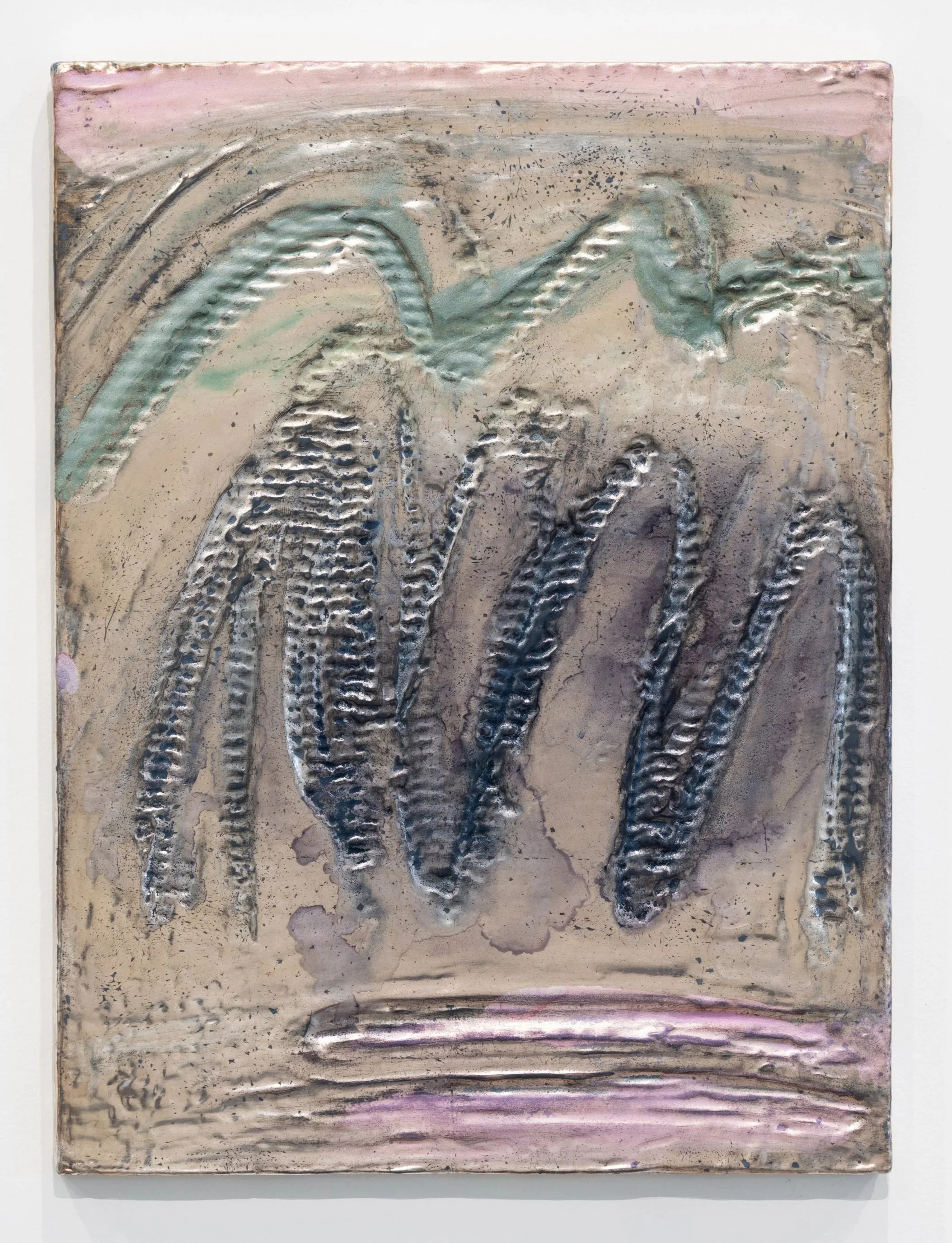
Silver Mountains, 2024
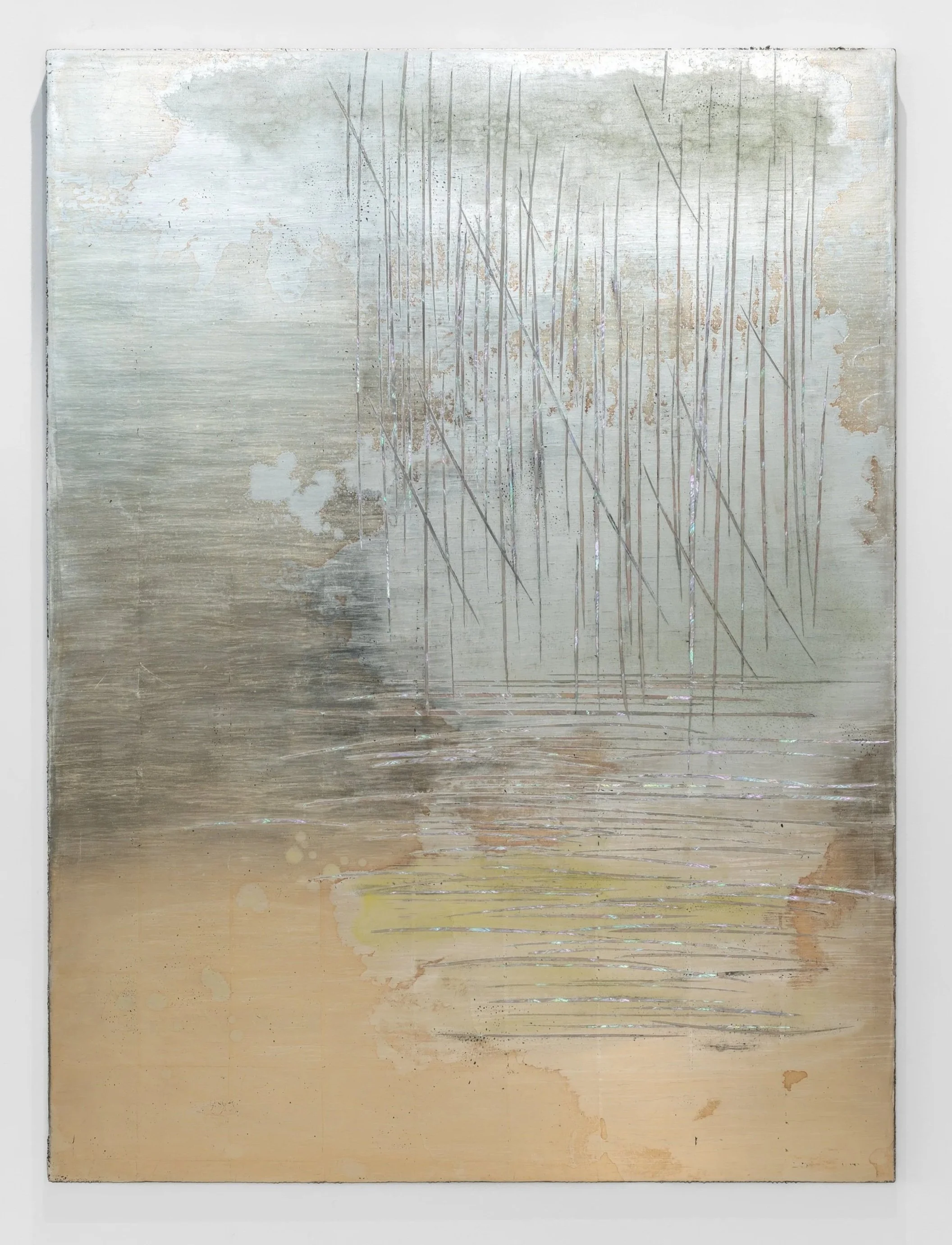
Rain, 2024
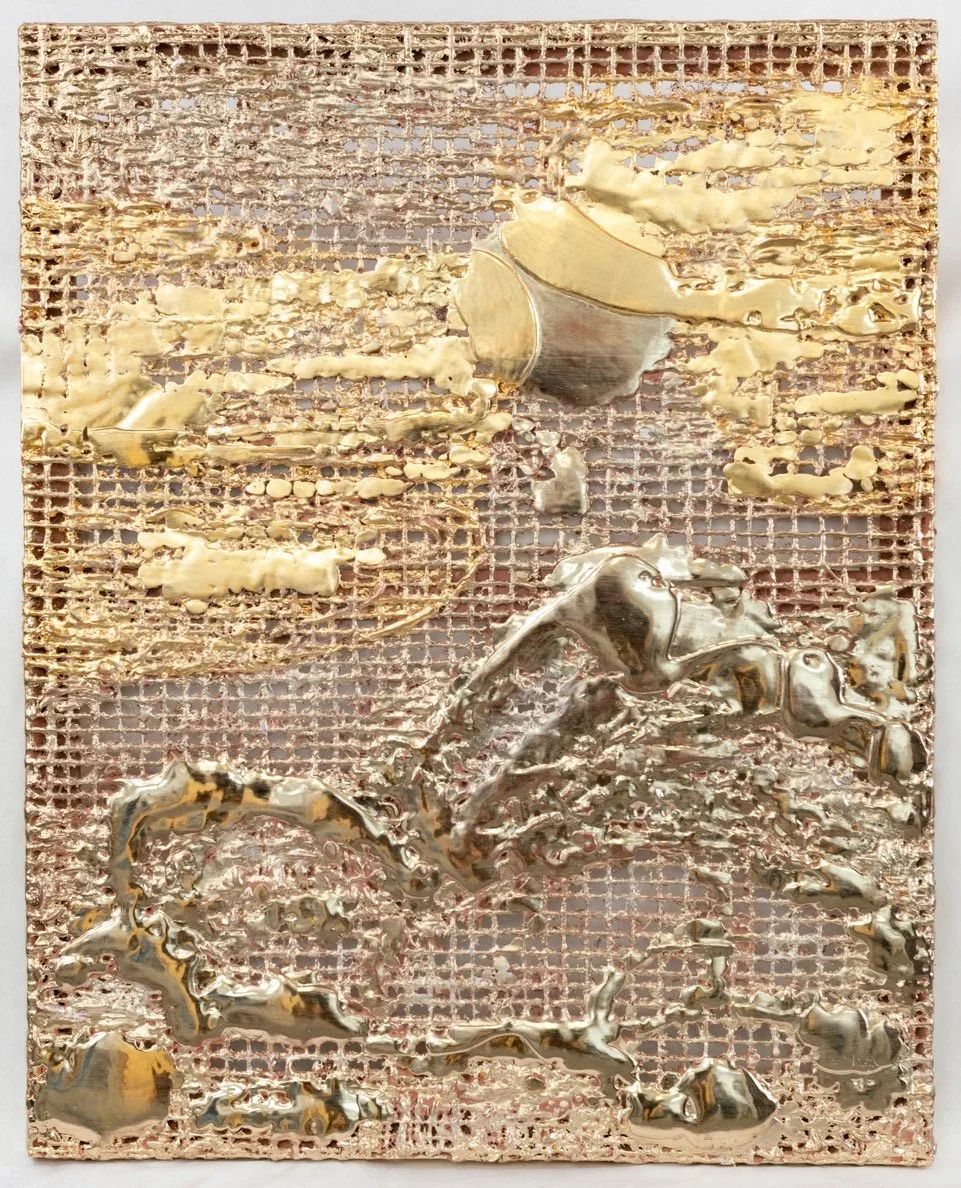
Moon Gold, 2021
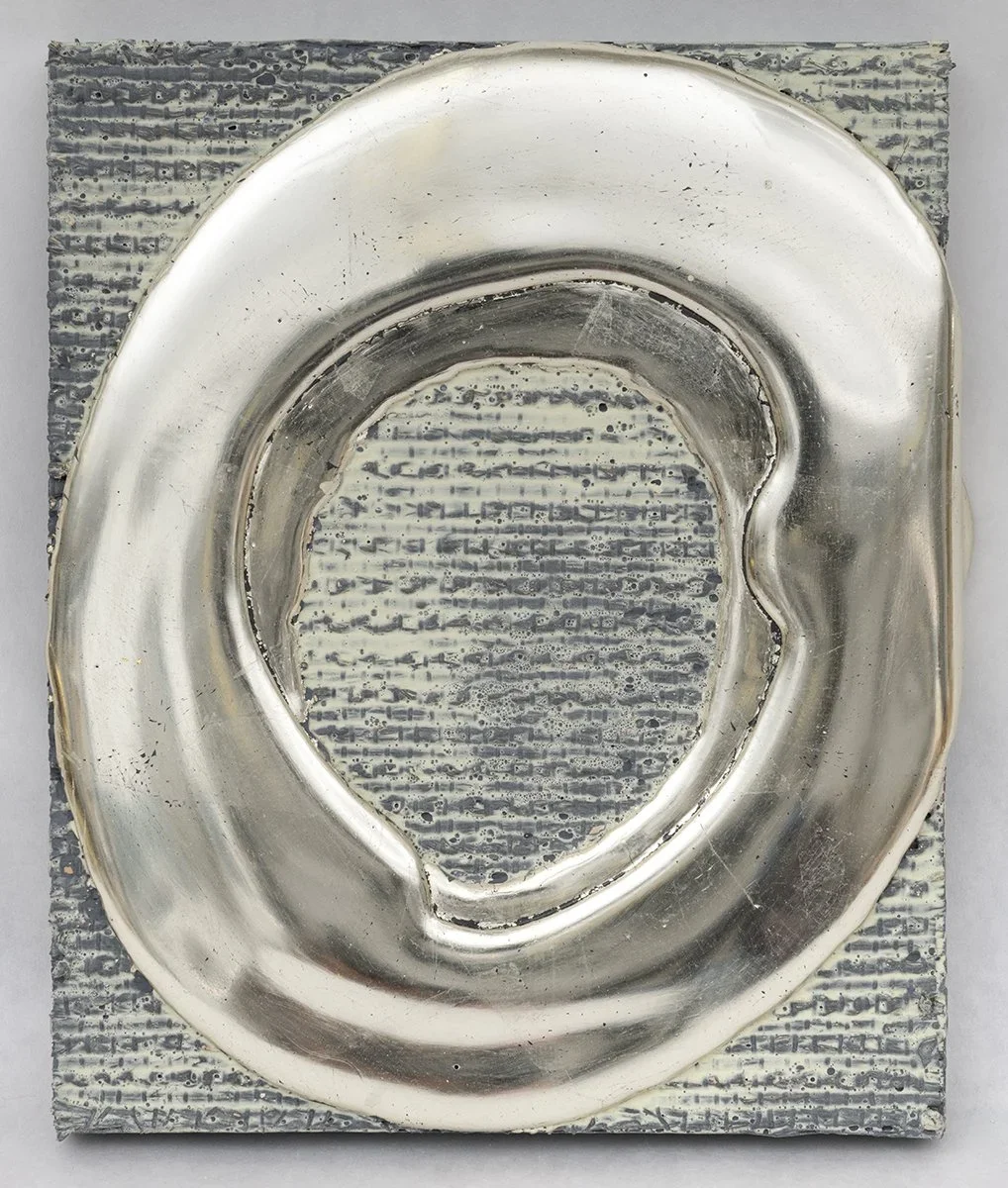
White Gold on Grasscloth, 2020
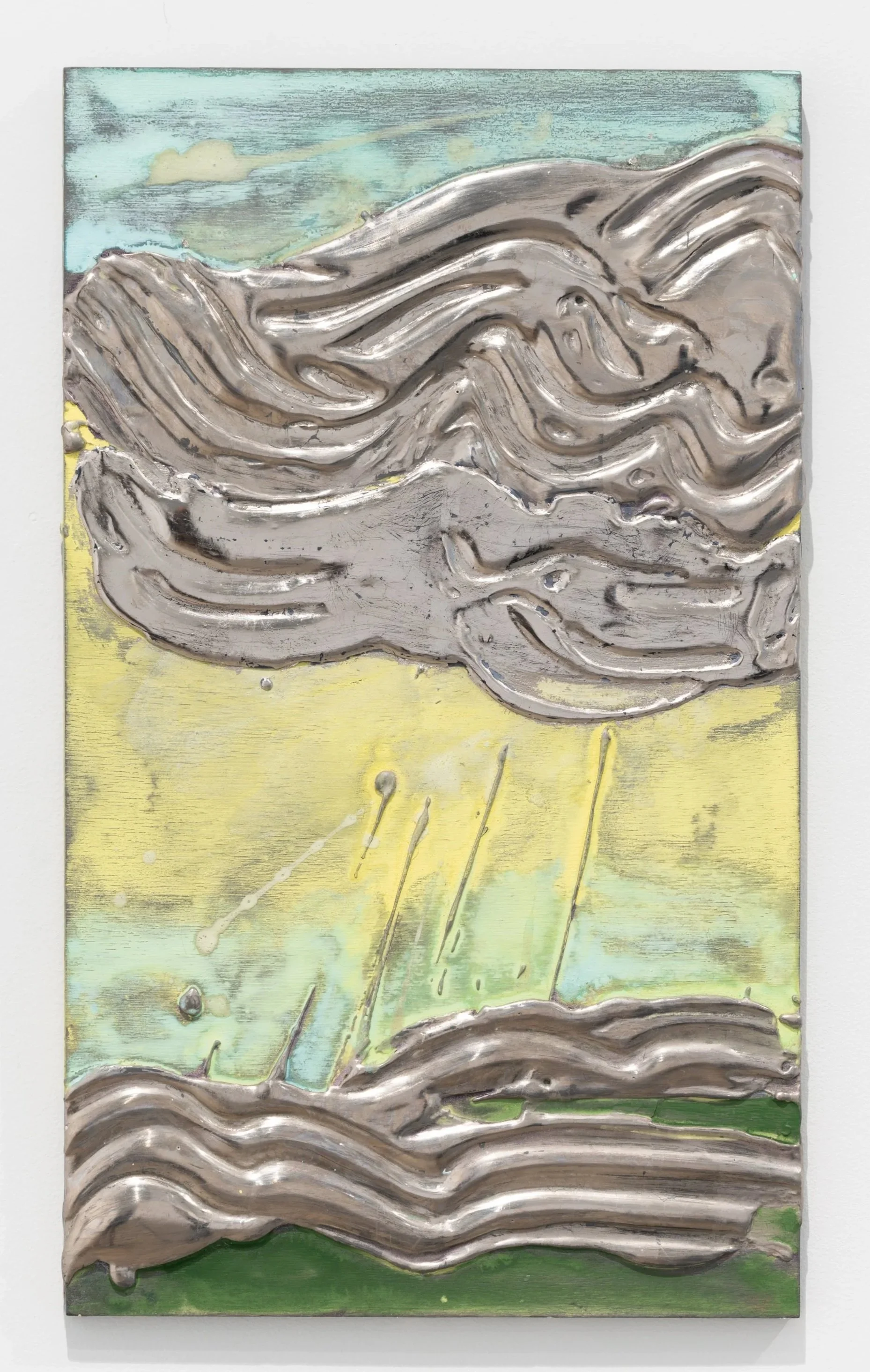
Palladium Cloud, 2024
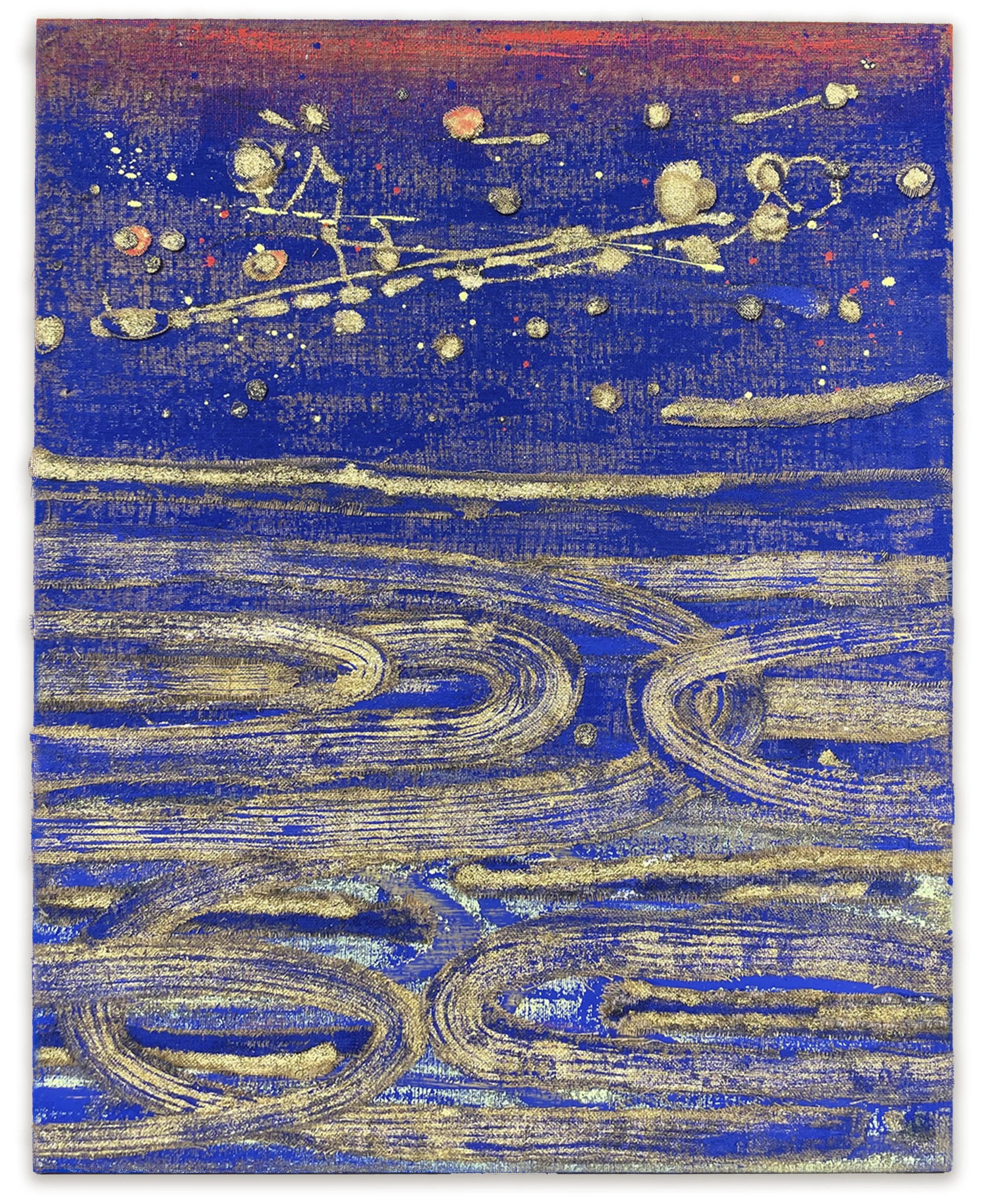
Sea and Sky, 2023
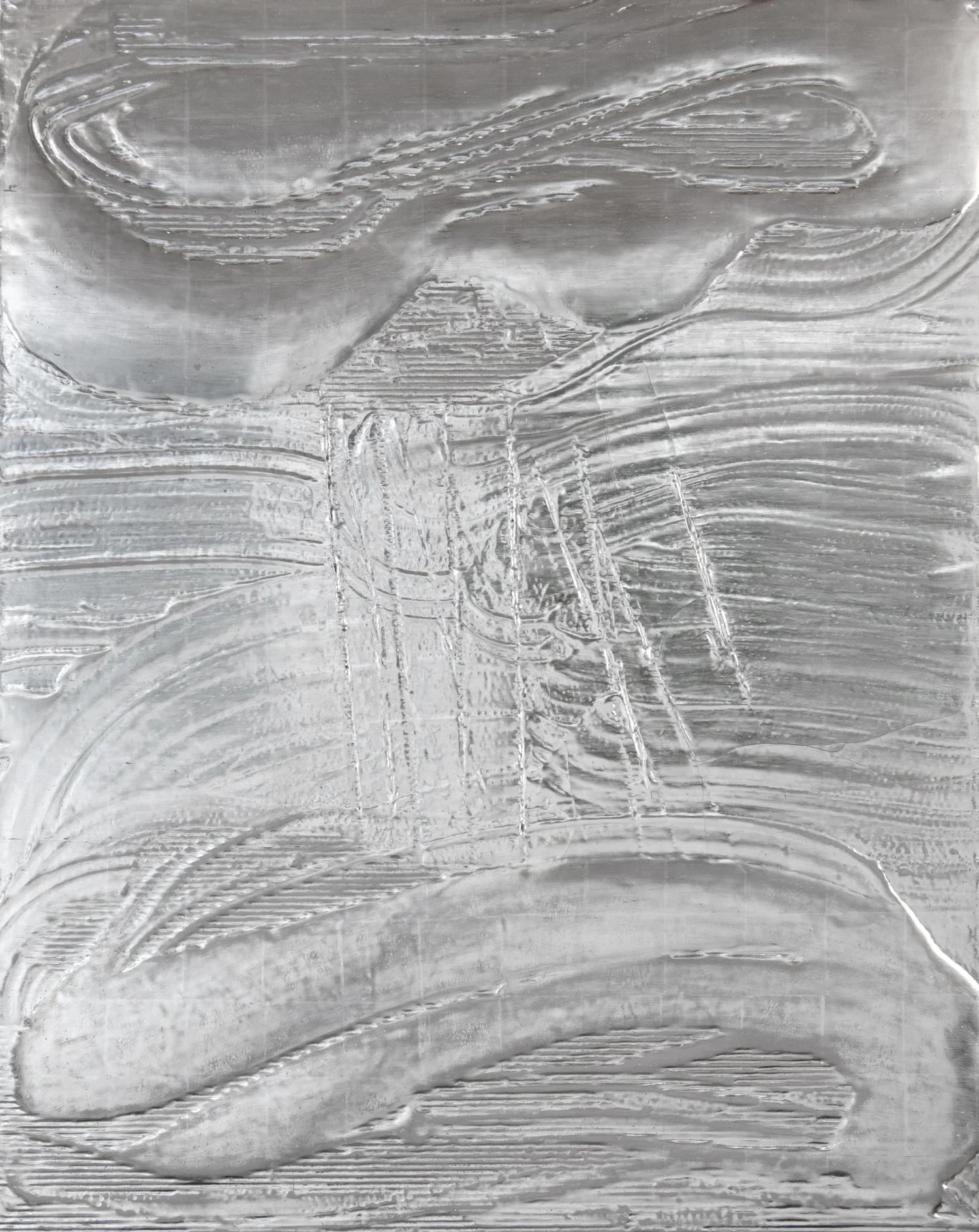
White Gold Cloud, 2023
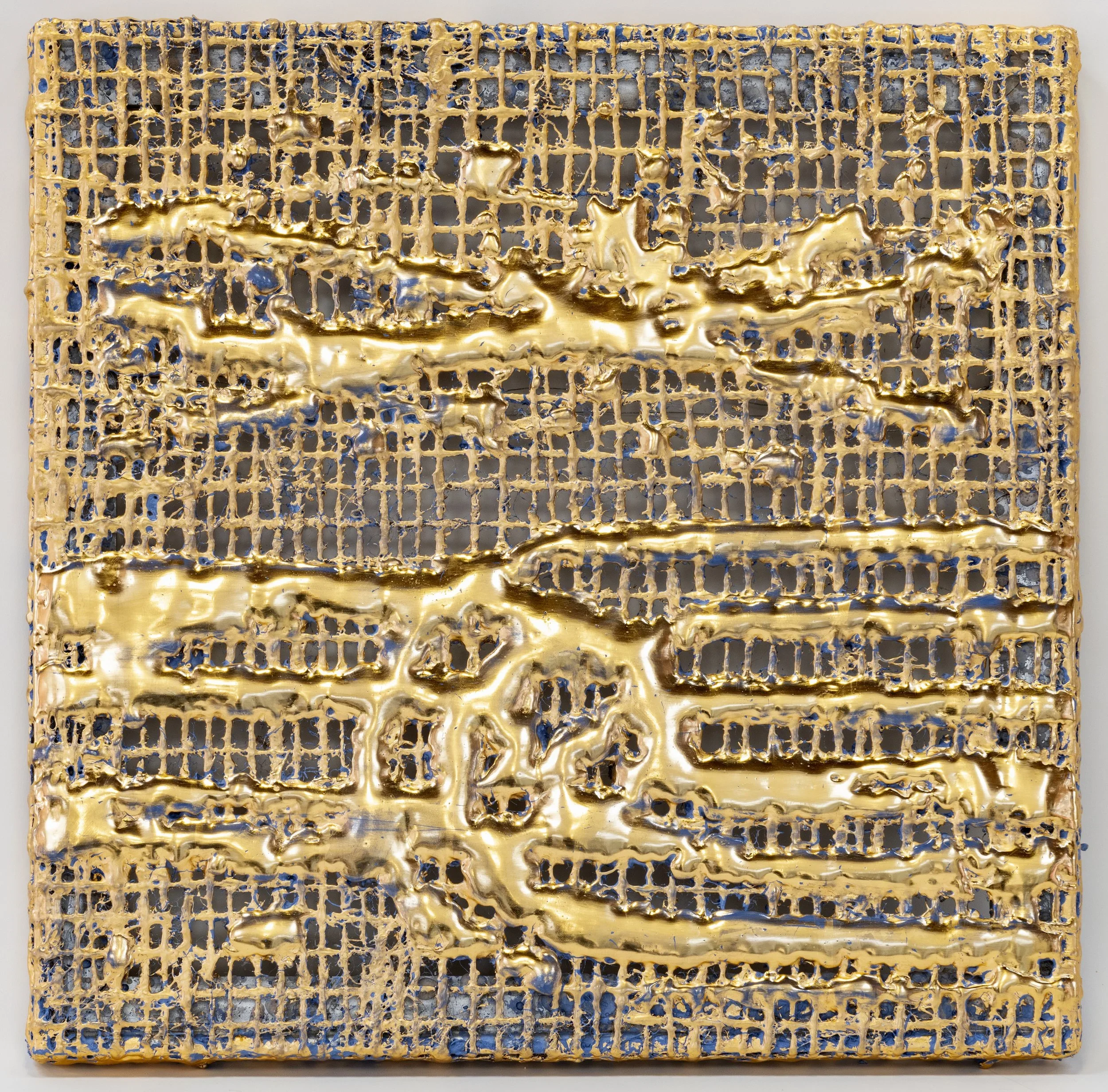
Sea and Sky, 2023
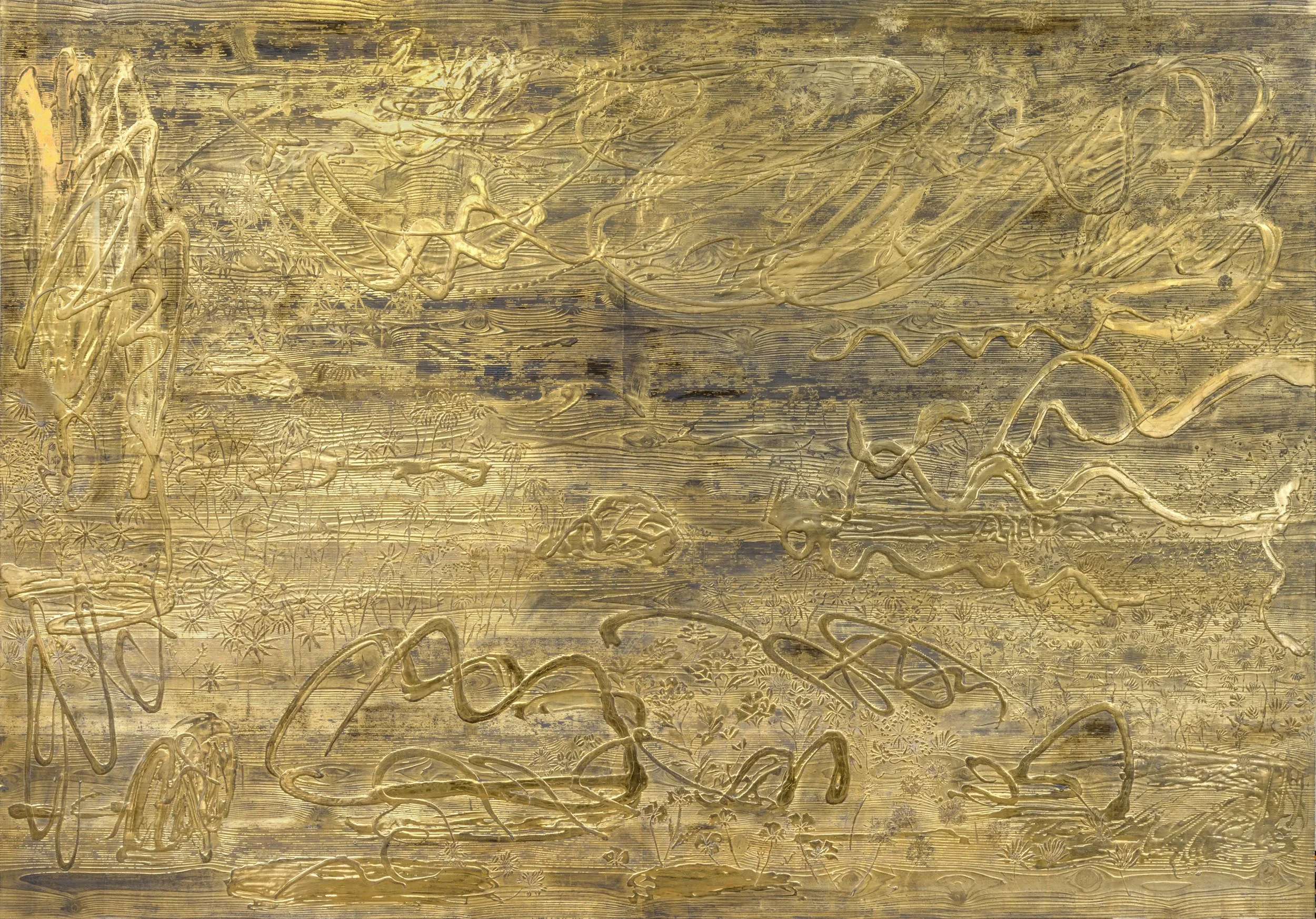
Field, 2018
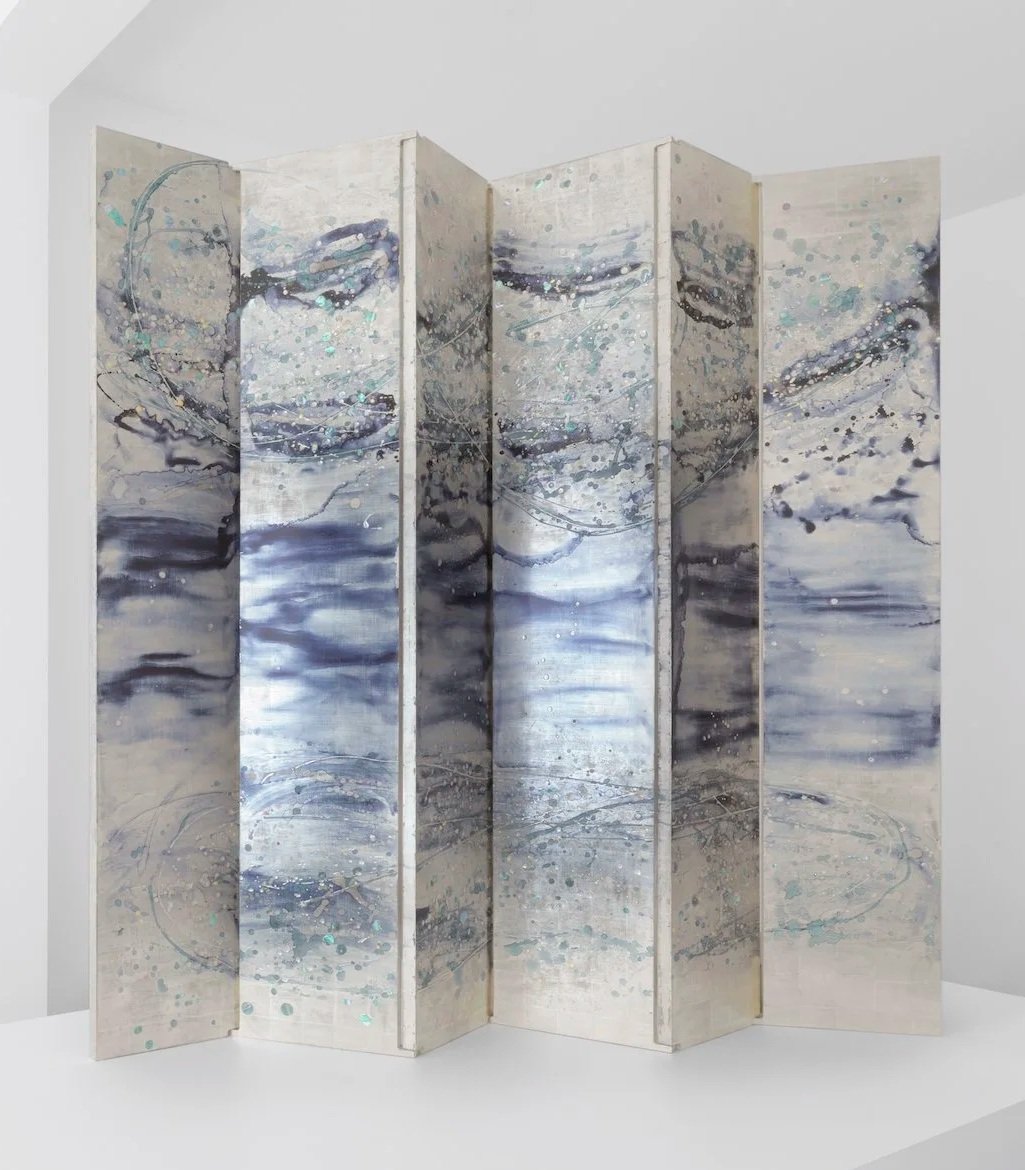
Night Sky Screen, 2016
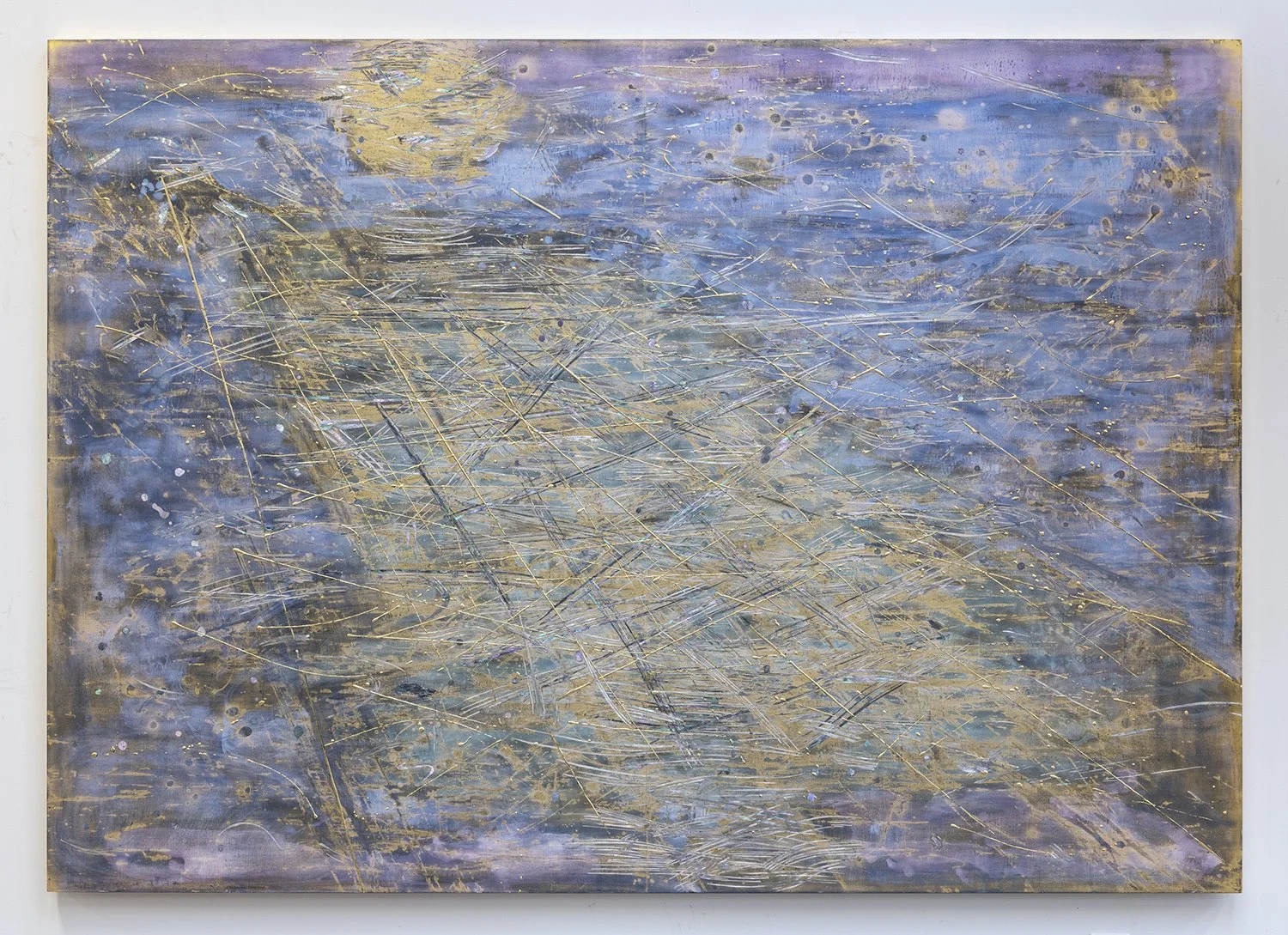
Early Moon, 2023
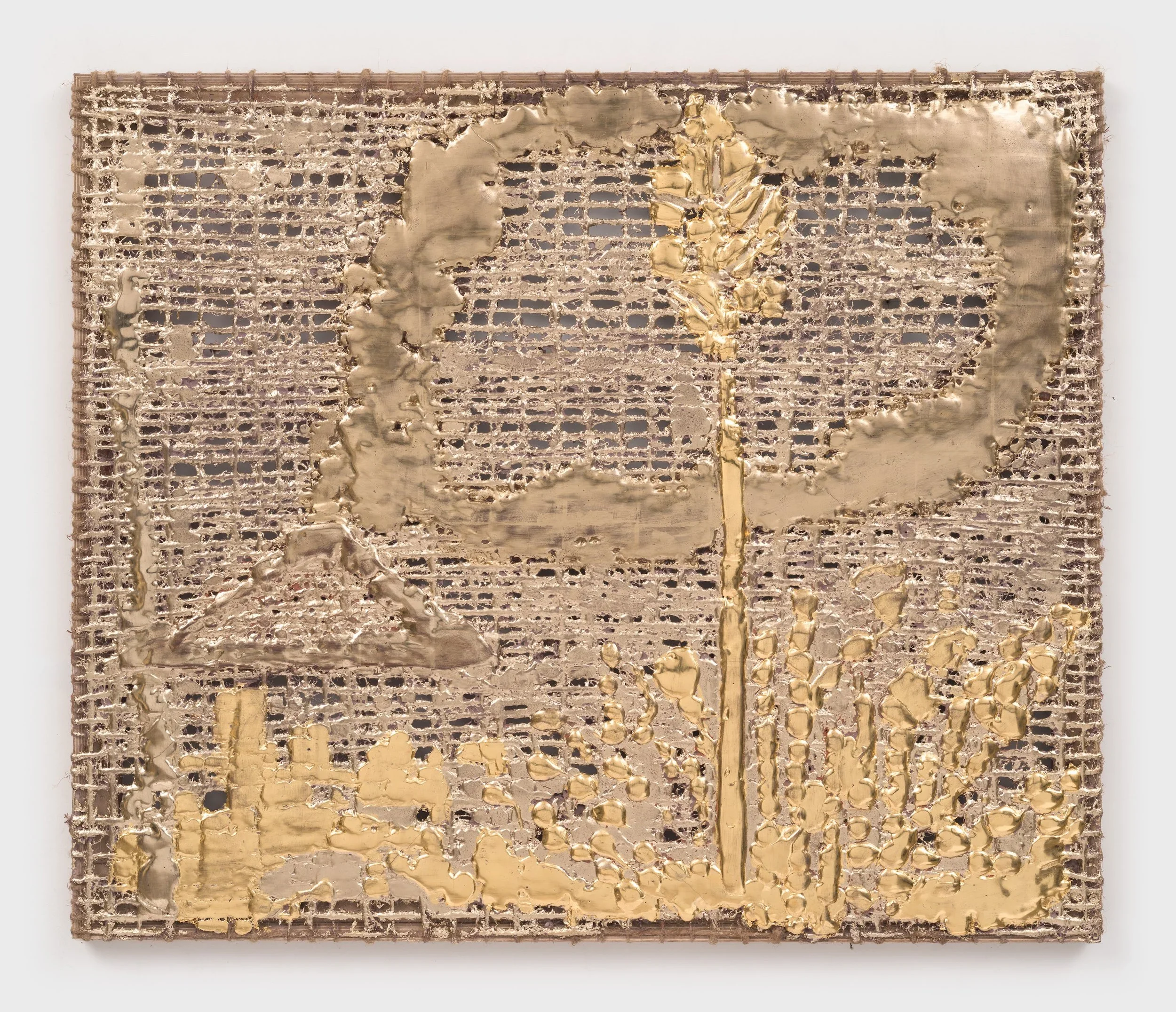
A Century Plant in Bloom, 2025
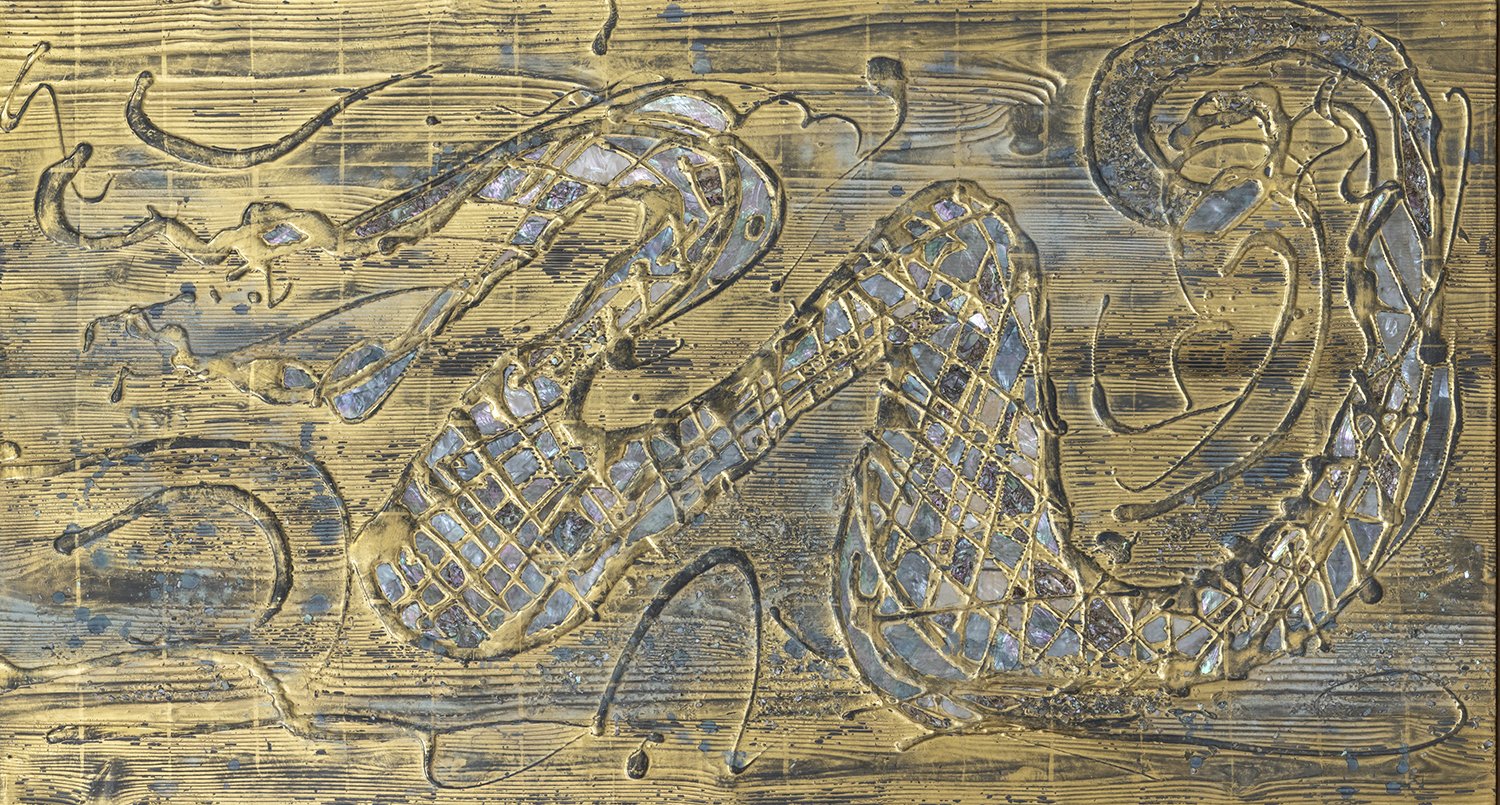
Dragon, 2023
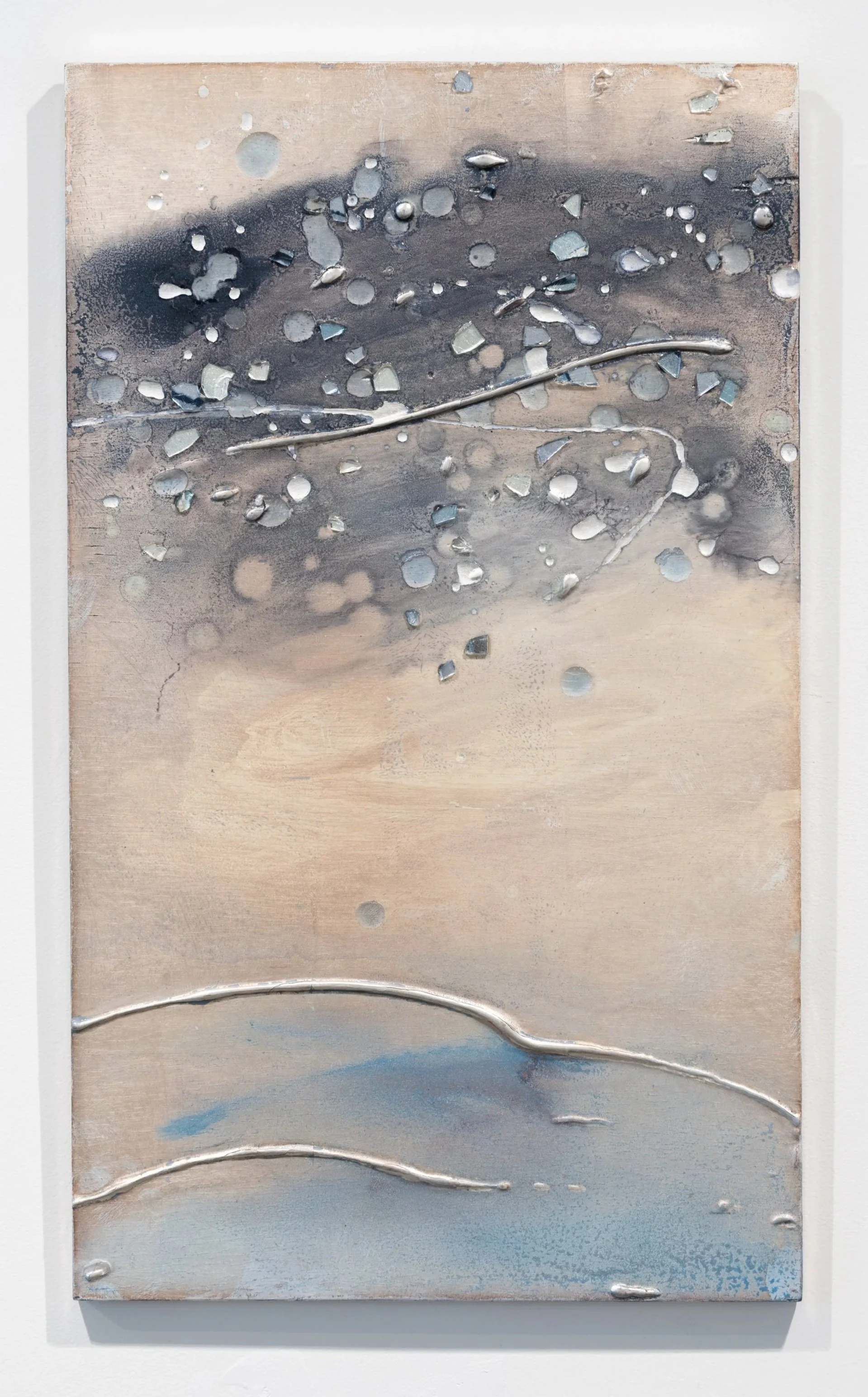
Starlight, 2024
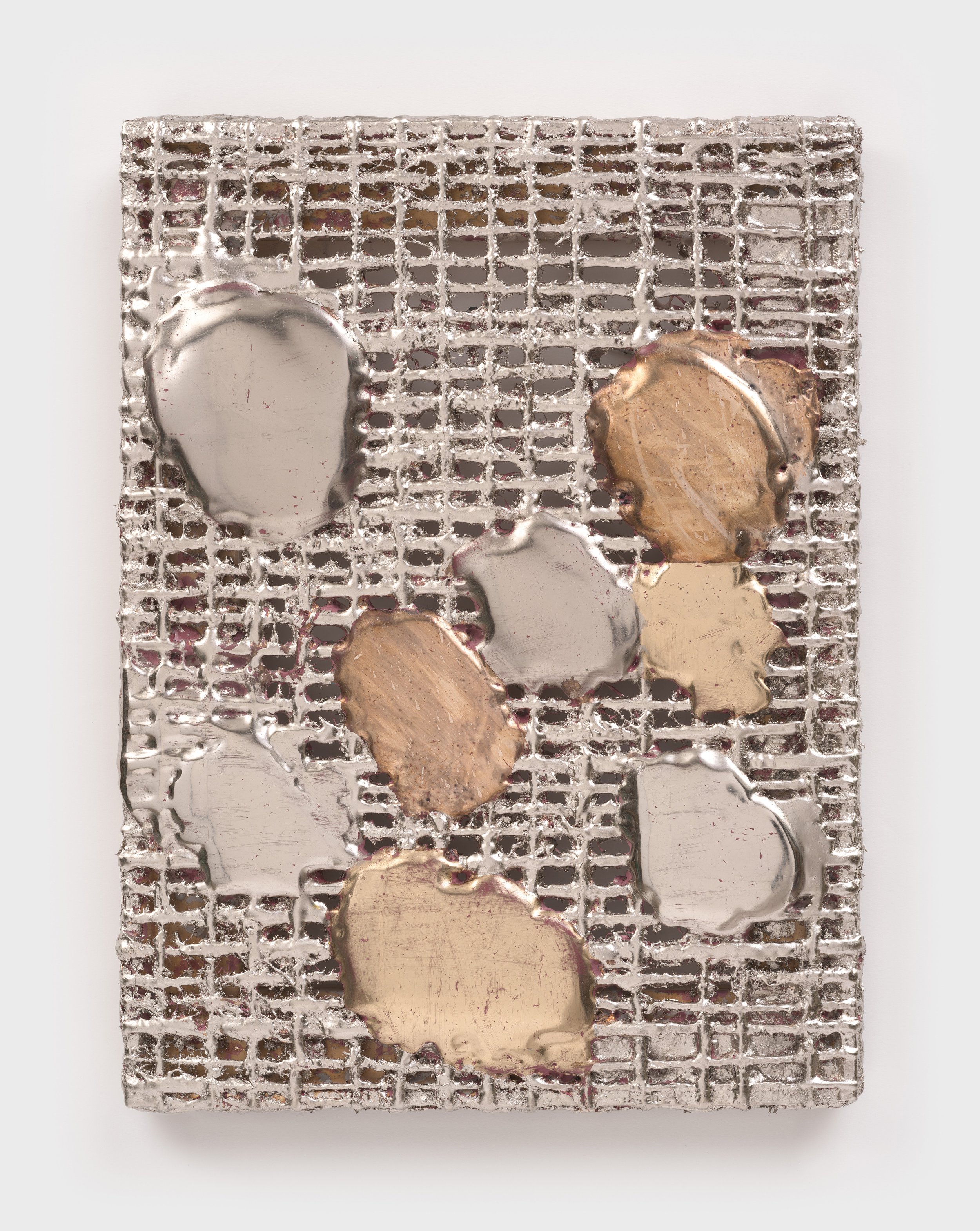
Dior Study
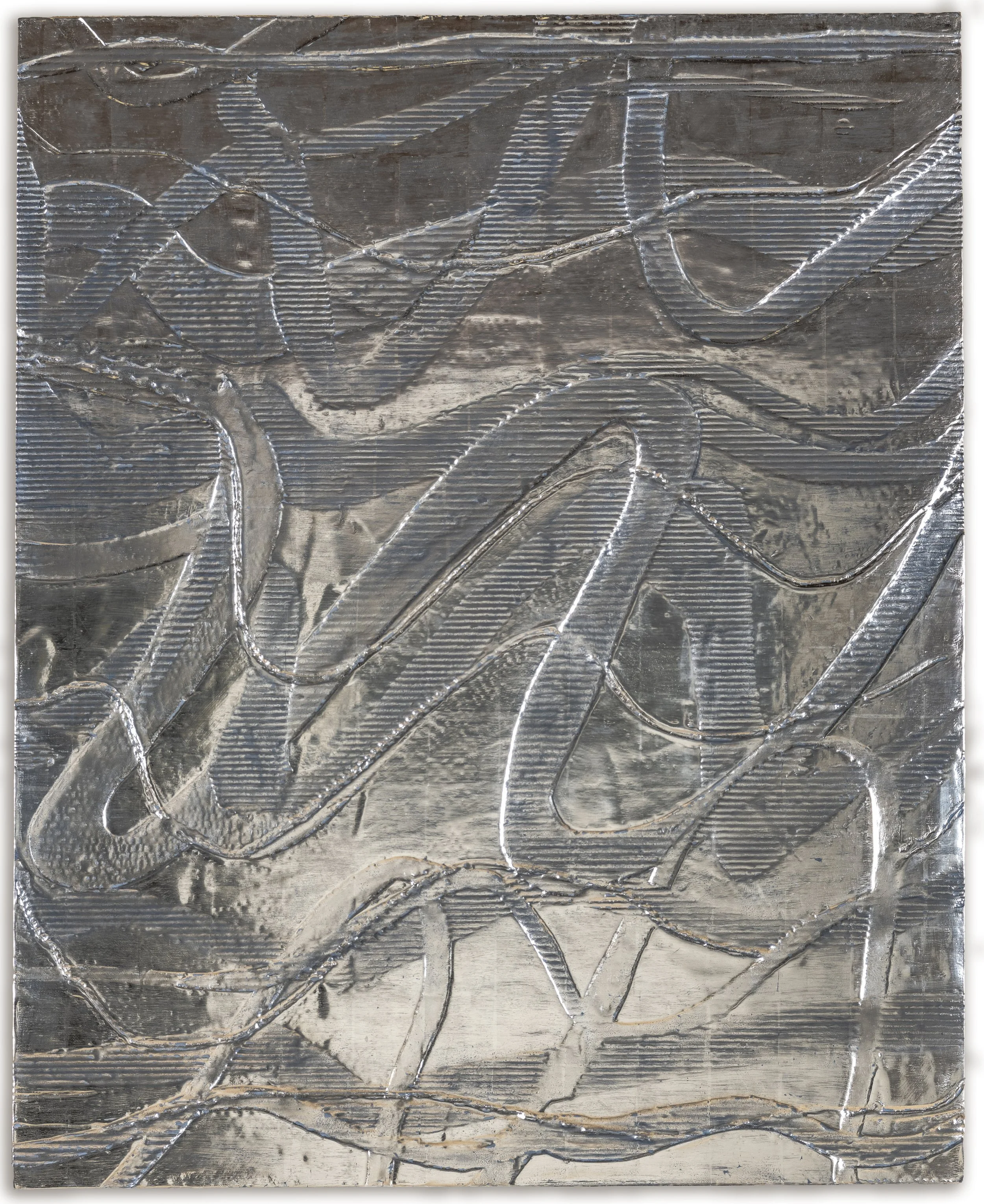
Palladium Calligraphy, 2023
Honey (After Ruche d’Abeille by Sheila Hicks), 2022
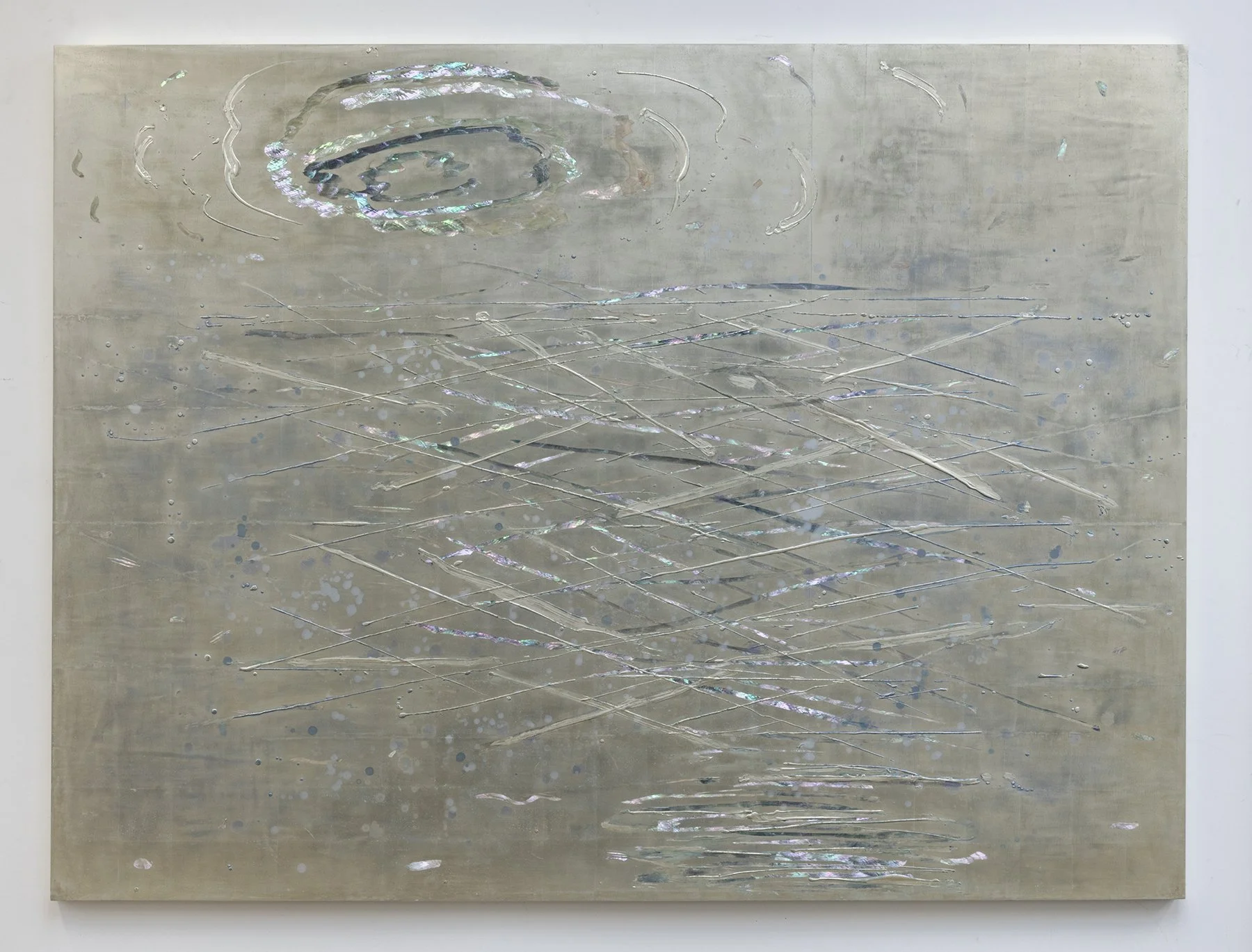
Floating Sun, 2023
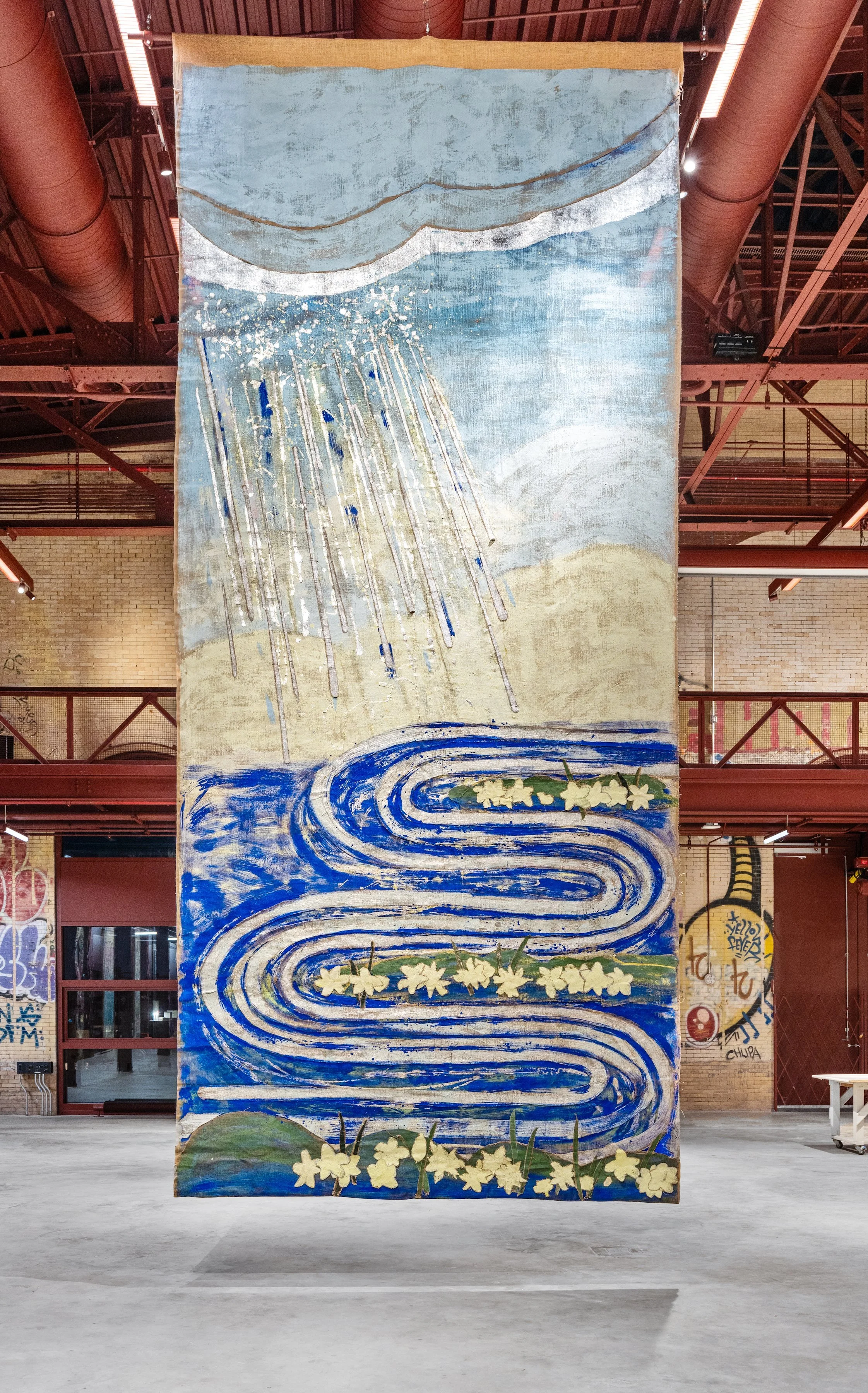
Rain, 2023
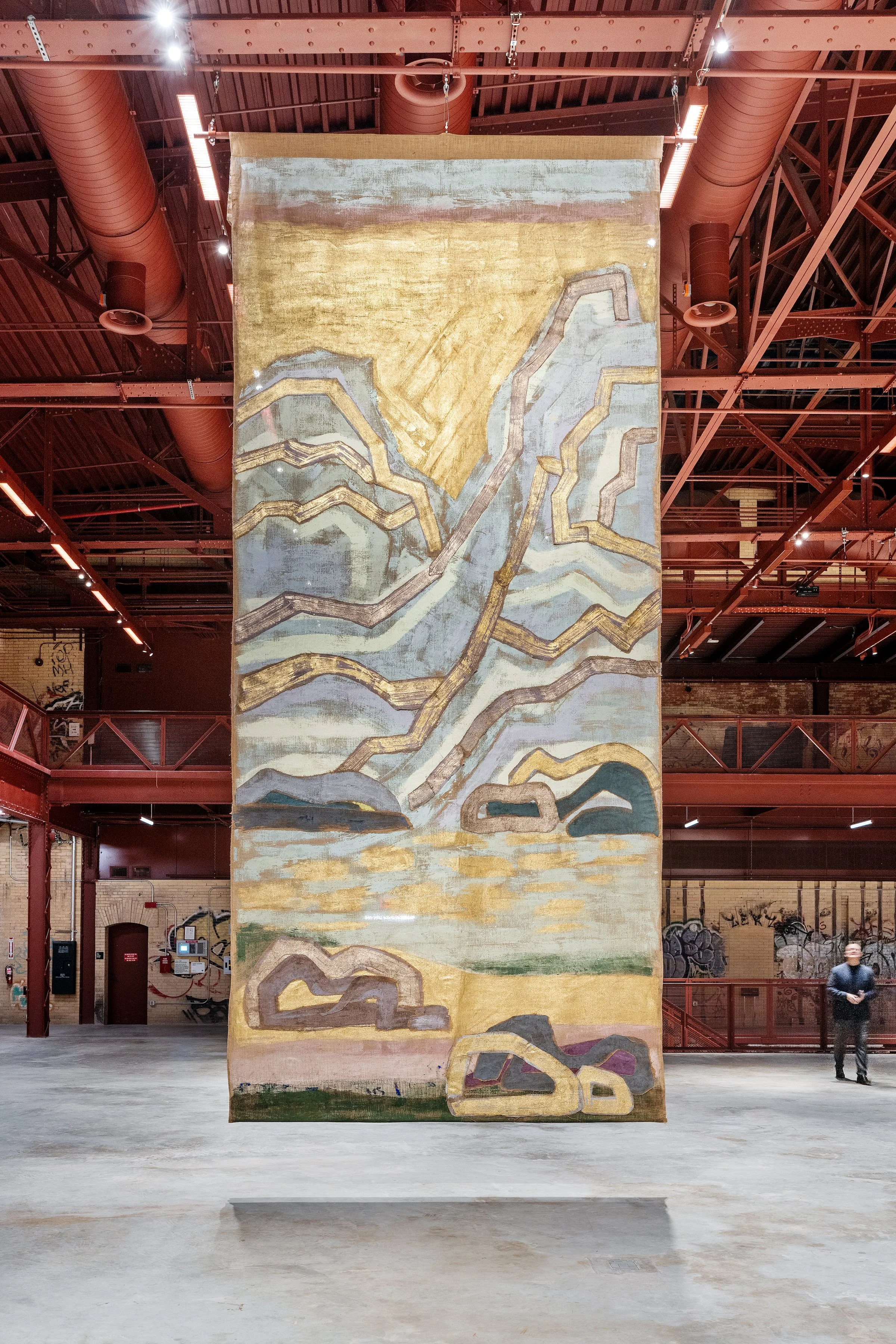
Mountain, 2023
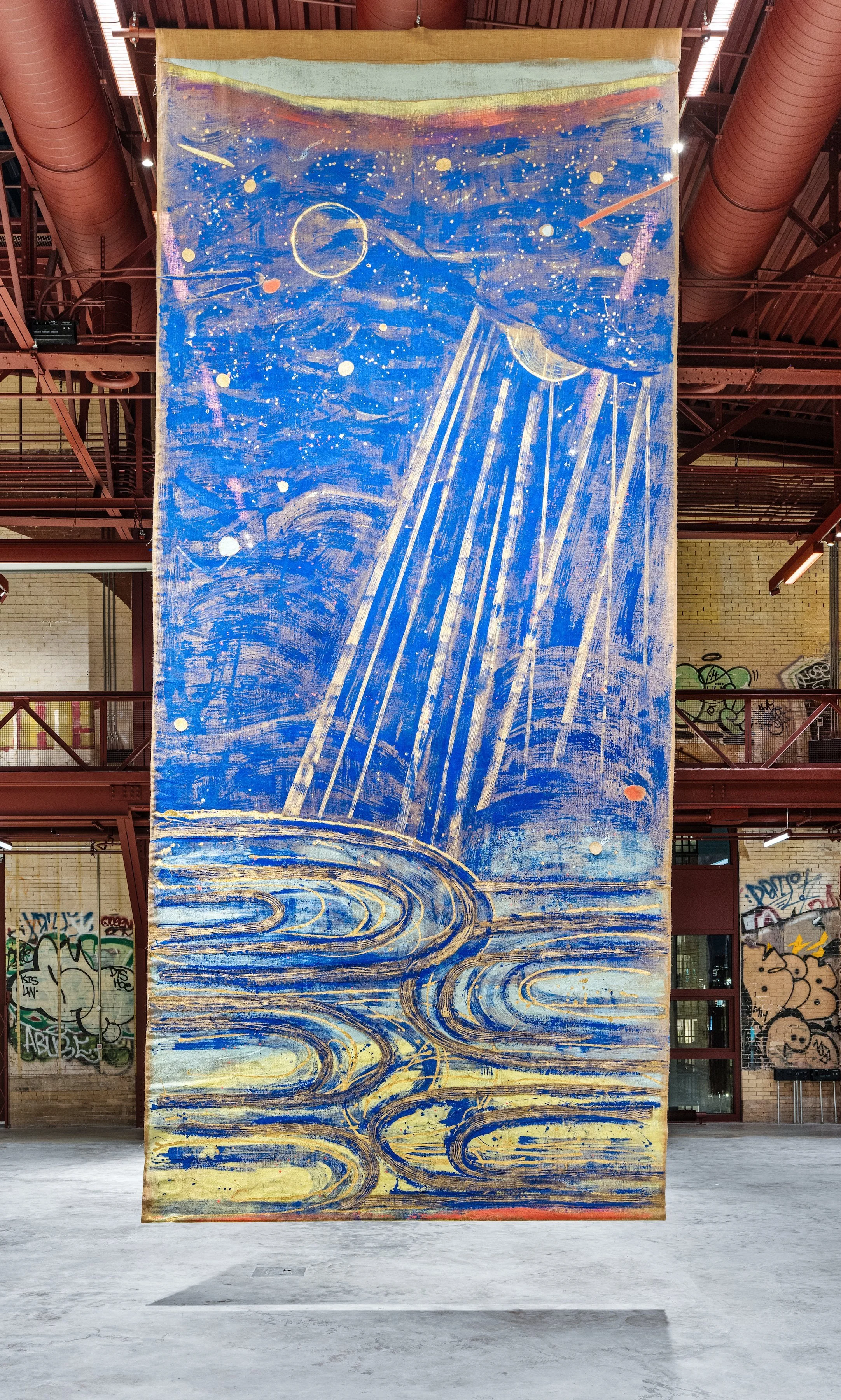
Constellation, 2023
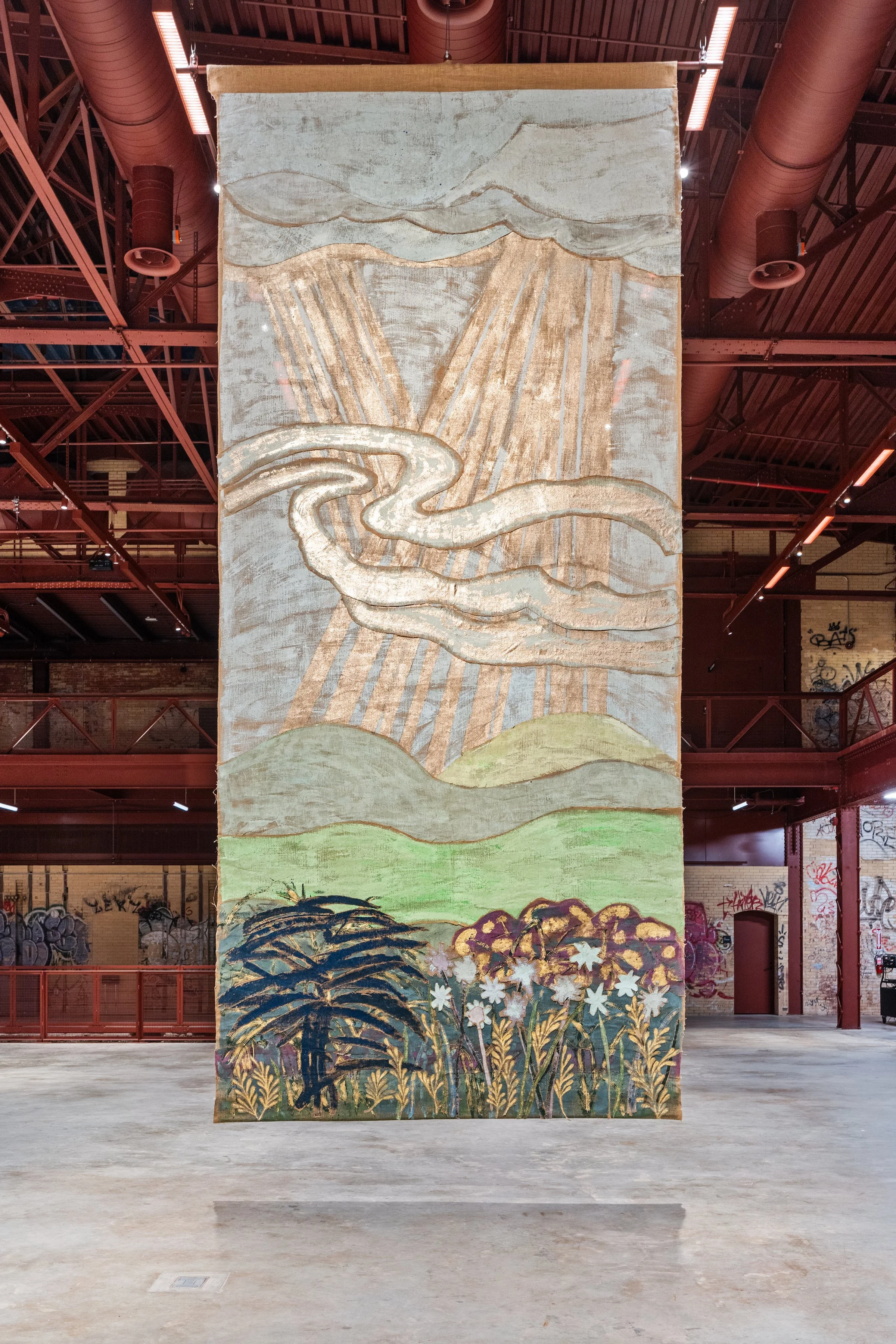
Garden, 2023
Nancy Lorenz
American b. 1962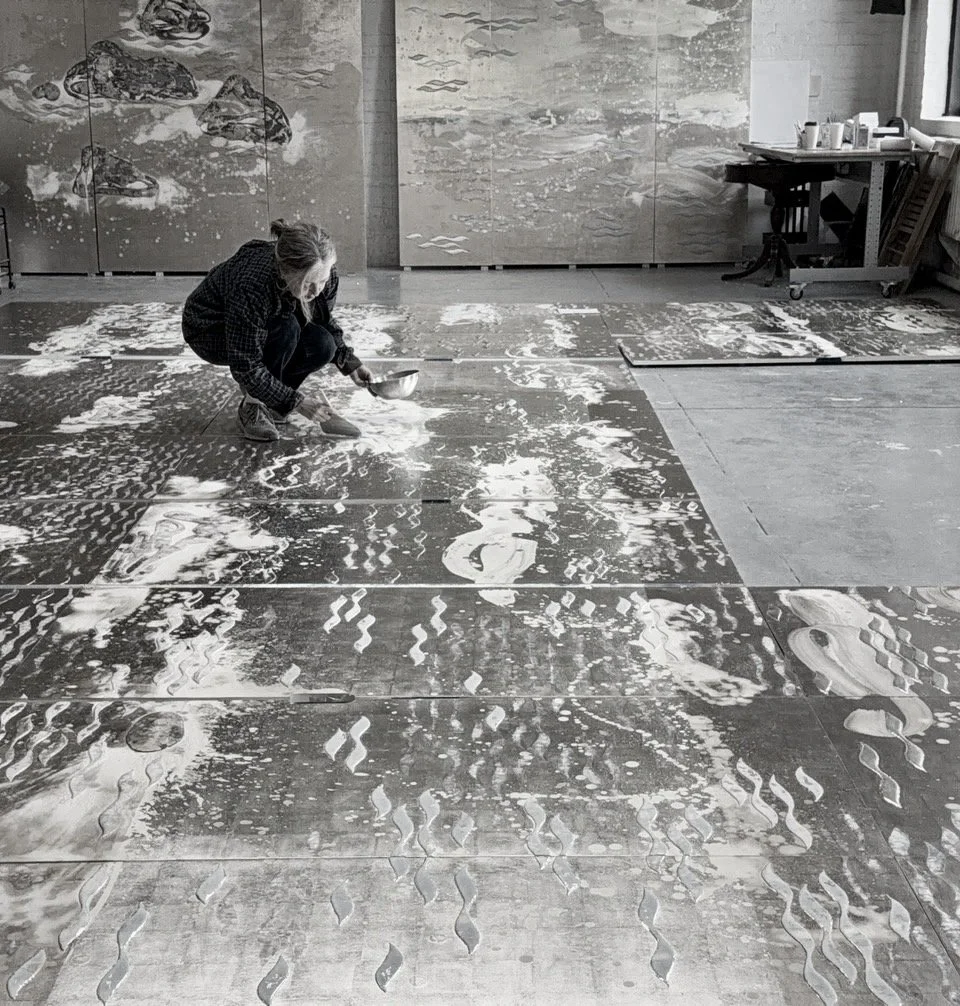
Nancy Lorenz is a visual artist and John Simon Guggenheim Fellow who lives and works in New York City. She earned her BFA in Painting and Printmaking at the University of Michigan and her MFA in Painting at the Tyler School of Art. Her work has been exhibited at numerous museums and galleries, including a mid-career retrospective at the San Diego Museum of Art in 2018. Lorenz’s most recent exhibitions were at ADAA The Art Show (New York), Gavlak Gallery (Palm Beach), PDX Contemporary Art (Portland), and a 2023 site-specific installation at Chiesa degli Artisti (The Church of the Artists) in Rome. She frequently collaborates with leading international architects and designers including William Georgis, Peter Marino, Michael Smith, and William Sofield. Lorenz’s work can be seen in public spaces around the world—including Chanel, Dior, and Tiffany’s stores—as well as in numerous private collections. An upcoming exhibition at the Taubman Art Museum in 2027 will feature the artist’s ongoing exploration of the periodic table of elements.